








Dear bloggers,
I learned about the Nestle Family blogger event with dismay when a friend e-mailed me about it. I was happy to hear that she had declined their invitation and hoped that many of the other mommy bloggers that I hold in high regard would follow suit. When I later saw the list of people who were attending, I was distressed to see women who I respect and women who are breastfeeding advocates had accepted the invitation. I wanted to believe that they must just not be aware of Nestle's unethical business practices and that once they found out that they would, of course, decline the invitation and boycott the event. That was not the case. Some of you heard the concerns and said that you didn't care. Some of you heard the concerns and said you would go anyways because you felt a dialogue with Nestle would be more productive. You are all skilled communicators. But having followed the Nestle fiasco for a long time, I know how ineffective dialogue has been in the past and I know that their public relations people will tell you a good story and try to take you for a ride.
That said, you are going. I can't change that now. Many of you were tweeting this morning about packing your bags and heading off to the airport. So, in a last ditch effort to help you make a difference, I am writing you a letter outlining the things I would like you to know.
How formula marketing kills
Let me be clear. This is not about what you chose to feed your babies. If you formula fed, whether by choice or by necessity, that is none of my business. That said, the marketing and advertising of formula has been linked to the deaths of millions of babies every year. According to the World Health Organization:
The protection, promotion and support of breastfeeding rank among the most effective interventions to improve child survival. It is estimated that high coverage of optimal breastfeeding practices could avert 13% of the 10.6 million deaths of children under five years occurring globally every year. Exclusive breastfeeding in the first six months of life is particularly beneficial, and infants who are not breastfed in the first month of life may be as much as 25 times more likely to die than infants who are exclusively breastfed.
In developing countries, the difference between being breastfed and being bottle fed truly is life or death. When women choose to formula feed in developing countries, their babies are at significant risk. They do not have the financial means to keep buying formula, so they water it down and give their babies less than they really need. There is often a lack of clean water, so formula gets mixed with dirty water, which can lead to infections, disease and death. In the developed world, formula feeding isn’t as likely to kill a child, but not breastfeeding does come with a whole host of health risks for both the baby and the mother. It can lead to deaths as well as increased health problems and increased health costs (whether you have a public system or a private insurance system, you do pay for other people’s health care to some extent). Around 1.4 million lives could be saved every year with improved breastfeeding.
Advertising formula and providing free samples to women in developing countries could be likened to advertising free c-sections with a dirty knife and untrained medical staff. Infant formula and c-sections can both be life saving under specific circumstances. But marketing them to the general public as an equal, better, or even close to as good alternative is dangerous, especially in countries where they do not have the means to use it safely.
The International Code of Marketing of Breast Milk Substitutes
In order to reduce the negative effect of formula marketing and save lives, the World Health Organization developed the International Code of Marketing of Breast-milk Substitutes (World Health Organization), which restricts marketing and related practices of the following products:
- breast-milk substitutes, including infant formula, other milk products, foods and beverages, including bottle-fed complementary foods
- feeding bottles
- teats, like bottle nipples and pacifiers
Governments in more than 60 countries have adopted the Code and made it law. Some countries have gone a step further by making formula available only by prescription or requiring warnings on labels. In the absence of legislation, the Code encourages manufacturers and distributors to comply with its provisions. Some do so voluntarily. Some pretend that they do, but instead blatantly lie (Nestle), do not fully disclose ownership (Lanisoh), or make other choices that compromise their compliance. Others just don’t care at all about compliance and care only about profits.
How Nestle lies, cheats and deceives
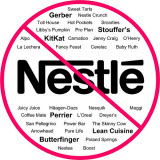
What is Nestle's role in this problem? According to INFACT Canada, Nestle controls 40% of the worldwide market for baby food and is active in 80 countries. It is the biggest player in this market. Other companies are unethical too, but the size and reach of Nestle makes its violations of the Code especially problematic and especially risky for moms and babies. Nestle has been characterized by experts in the field as the worst of the baby food companies in terms of its breaches of international standards.
Some illustrations of Nestle's unethical practices include:
- Nestle has an Infant Formula Marketing Policy that it says complies with the International Code of Marketing of Breast Milk Substitutes, but its scope is much narrower, covering only infant formula (instead of all breast milk substitutes) and covering only developing countries (instead of all countries). Read more here and check out a detailed chart comparing the two here.
- Nestle invests in public relations initiatives to divert criticism, instead of making changes to bring its practices in line. Read more.
- Monitoring of the baby food industry by NGOs has found many areas where Nestle's advertising and promotion practices violate the Code. Look here for 13 pages of illustrated and annotated examples of violations.
- Nestle systematically violates its own policies as brought to light by a senior Nestle employee in Pakistan who resigned and then wrote a scathing, detailed and well-documented whistleblower report on all of the violations that were both allowed, encouraged and ordered by his superiors. He is pursuing legal action against the company. His family has been threatened.
It is important to note that Nestle will try to tell you that all of this is in the past. That has been their approach all along. According to Baby Milk Action's report on Nestle's PR machine, "Nestle's strategy is to admit to malpractice only years in the past, even though it denied it at the time".
Beyond the marketing issue, there are other business practices related to its infant formula that have come into question. For example, apparently Nestle is purchasing 1 million litres of milk per year from Grace Mugabe, the wife of the President Robert Mugabe, despite sanctions due to human rights violations by his government and despite the fact that these farms were seized from farmers by Grace Mugabe. As per its usual practice, Nestle came up with some weak excuses for why this was not a problem.
There is so much to say. I feel like there is no way I can do it justice in a few short paragraphs.
What I would like Nestle to do
I think there is an opportunity for Nestle, as a leader in the food industry, to take a leadership role on this issue. At a minimum it should start abiding by the law in all countries where it operates and not just the letter of the law, but the spirit of the law. But ideally, in order to rectify some of the damage that its past practices have caused, it should go above and beyond what the law requires. Nestle should:
- Commit to abiding by the International Code of Marketing of Breast Milk Substitutes in all countries worldwide for all products covered by the Code
- Ensure that all of its packaging includes information on:
- The risks of formula
- Where people can go for breastfeeding help from trained lactation professionals (not Nestle staff)
- Provide funding for lactation programs in developing countries and in low income neighbourhoods in the United States as part of its corporate social responsibility program
I think a complete about face is required here. Nestle should shift from trying to circumvent the law and the Code to proactively trying to encourage the safest nutrition for infants.
What I would like you to do
At a minimum, while you are there, I hope you'll listen with a critical ear and not take everything at face value. Nestle's public relations machine is well oiled and they will find a way to "address" your concerns without really doing so. I would like you to tell Nestle in no uncertain terms that you do not support its unethical business practices. I would like you to tell them that you will not be using your blog, your twitter presence, or any other platform you are on to help market their products. I would like you to tell Nestle that you are going to boycott its products and ask your friends and family to do so too. Above all, I would like you to ask yourself how you feel about supporting a company that puts profits ahead of the lives and health of babies.
I'll be watching your blogs with interest and a critical eye following this event.
Safe travels,
Annie
Important Note
Following the event, I posed a number of follow-up questions to Nestle via e-mail. As they respond to them, I am posting their responses and posting a reply to their responses in separate blog posts. You can access an index of the questions, and the blog posts with the responses here:
Follow-up questions for Nestle


{ 213 comments… read them below or add one }
Thank you so, so much for writing this post.
I do hope that there is an opportunity for at least one of the bloggers to engage in such dialogue while they are there. As you know, I declined having a relationship with Nestle due to these concerns. I was tempted to go to the event to maybe bridge a gap or do some investigation on my own, but I just don’t have the emotional energy, plus I have Ivy (whom I am still breastfeeding), and I honestly just wasn’t ready to be associated with Nestle at this time. But, I do believe there is always still time for change…
Steph
This is so very sad.
If I were a conspiracy theorist, I’d probably come up with some population control theory.
HOW does it benefit Nestle to have babies dying from using their products??? I don’t get it.
DUDE. Population control totally occurred to me, too.
*cue eerie music*
Way sad.
I agree also, it is similar to a ‘pack’. Kill off the weakest link. No?
As studies have shown that it is the ‘weakest link’ (using the term loosely eg: uneducated, poor etc) that use formula. And the use of formula lowers IQ, wastes money that needn’t have been spent and could have been used on education or housing etc, increases health probems etc.
Just more theorys….
I still don’t understand how a breastfeeding advocate accepted the invitation, but hey, money talks. I’m disappointed in the bloggers who are attending, but also baffled by their responses. I can understand some of them didn’t know about the Nestle Boycott, but once the information was presented, how could they still participate in good conscience? Is a two-day trip to California and a couple of Omaha Steaks for your husband and kids to eat while you’re out of town worth it?
I’ll be keeping a close eye on their tweets as well, but I won’t hold my breath that they’ll learn anything or that any minds will be changed.
I’d also like to remind people that is not about breastfeeding! Nestle’s business practices are notoriously bad and they are as corrupt as can be. Do your research and find out about their shady water business, their use of child slave labor to make chocolate, the way they’re in bed with dictators in Africa, how they sabotage small businesses in developing nations. The list goes on and on. Their products are varied and they scoop up more and more companies, so they are difficult to boycott. However it’s important to take a stand against unethical corporations. I wish these bloggers had taken a stand.
I completely agree…. while in school for my MBA, the signature case study for our ethics class was on Nestle and their horrible, unethical business practices.
@Alina: Did I teach your ethics class? Because I use that case study when I teach business ethics too. Oh wait, almost every university does, so you probably weren’t in my class.
What “money” is it that you speak of? Really, let’s get down to the meat and potatoes here, okay? At events like this, do you think bloggers are paid big bucks to attend, or something?
You’re mad at Nestle, direct that anger at Nestle and talk to THEM about your concerns, leave the bloggers out of it who are there for EXACTLY what you’re desperately wanting – dialogue.
Thanks for writing this. I hope the list of attendees knows that their credibility, as far as I’m concerned, is now utterly shot. Accepting a gift such as a trip is not a prerequisite for “opening up a dialogue” so don’t kid yourselves. Totally unnecessary. Totally gross. I’m truly sad and disappointed.
just to clear things up, i am not attending this event.
yes, i am on the list, but i chose not to attend.
thanks.
m.
@matt: I’m glad you decided not to go. I wish more of the others had made the same decision.
Thank you Matt.
Thank you for taking the time to write this detailed post. You are a hero in your own way. Thank you, thank you, thank you.
It’s a good post. Not everything on the “nestle lies” link passes muster, but there’s enough to be concerned about.
When I was invited to attend the PR rep asked if I’d heard anything about Nestle, or knew about their products. My reply was that I’d read about unethical business practices with respect to formula in developing countries, and that I didn’t really use any other Nestle products (based on the list of brands on the website). This did not deter the rep, who, despite knowing I had an unhelpful opinion about Nestle still wanted me to attend. I declined in full because it seemed to me that the bigger the company, the more visible a blogger’s involvement with them is, even if all that’s ever done is a single post saying “So, I went to this thing at Nestle.” And I don’t want to be in bed with any company that far.
I don’t know who is going to the Nestle event. I hope they ask a lot of questions. I don’t think the right solution is to NOT go, to NOT talk to them, if you are very strongly opposed to them. Being able to ask questions directly, instead of relying only on third-party accounts of Nestle’s actions or press releases, is invaluable. And there is no better way to deliver “gotchas” than by getting someone to confirm or deny an explicitly designed question that leaves no room for doubt. To win, really, you need to defeat the strongest version of your opponent, and that means not allowing them to be drawn for you by someone else. The potential for straw-men is too great.
But, the question is… can you trust the “spokesperson” who will be answering questions at the event? Although talking might work for a rational company, the only way to affect an unethical company is via the bottom line. And that means boycott, in order to affect their profitability.
I didn’t know about this, but I am very surprised to learn that breastfeeding advocates are attending. I feel the same way about this as I would about Nestle sponsoring a medical conference. It’s a conflict of interest. It’s sort of implied that when somebody gives you something, you ought to be grateful, and that gratitude trumps criticism. If you want to engage with a company, surely you can find a way that doesn’t involve accepting gifts from them and simultaneously providing them with publicity.
First things first…I was invited to attend this event but declined for reasons other than stated her. I’m a stay at home mom and my children come first, that means not leaving them in a stranger’s care for 4 days.
Second, after reading some of the statements made here I feel better about my decision not to go. I would never want to be associated with a company that practices business in this way.
Thank you for shedding light on this topic!
They could be going to show their disapproval with the company. This is the same thing that any number of people do to get their side of the argument heard. It probably will not produce many results but if you do not go you cannot speak or be heard. I think that parents with Autistc kids would go to a Vaccine event even if it was sponsored by GSK just so they could stand up there and show what happened to their children. Maybe, hopefully, it is the same thing.
And not to be too much of a downer – but most people do not understand the scope of these problems or how pervasive they are. IF you were to boycott all the comapnies that do shitty things you would 1. not be able to go to work, 2. not be able to wear anything and 3. not be able to buy any food – just to name a few. They may also be of the opinion that the problem is too big for a few person boycott.
@Sharon:
You are right. The problem is too big for a few people. That is why we need lots of people to take a stand. Nestle is not going to listen to a few concerned consumers, to a few bloggers, to a few politicians, to a few lawyers, to a few NGOs. We need more people to understand the scope and the gravity of this issue and to take action. They will not listen until enough people boycott for it to make a difference in their profit margin.
I do agree that lots of companies do shitty things. However, very few companies do shitty things on the scale that Nestle does for as long as Nestle has been. It has been over 30 years now that this problem has been ongoing. Over 30 years that they have been denying any wrongdoing. The reason I don’t think it will make any difference for any of these bloggers to try to “talk” to Nestle at their event is that people have been trying to talk to Nestle about this for three decades and they have been spinning their message the whole time, rather than addressing the problems. If I had concerns with a company and otherwise respected its product and business practices, then I might take a chance at attending an event in order to engage in dialogue (e.g. if Medela or Lanisoh was having an event). But Nestle has been closing its ears for too long. I think anyone who thinks they will suddenly start listening this week is naive.
I had read quite awhile ago about Nestle and their shady business practices – but then I forgot all about it in the hustle and bustle of regular life. Thank you for posting this and for reminding me of this issue.
Wow…my first foray into controversy. To be completely honest, this is the first I’ve heard of the issues regarding Nestle’s practices. While I don’t think everyone should be broadly painted as unethical for attending, I can definitely understand the concern over it all.
Being a devoted father and husband, and seeing how my other website centralizes on babies and pregnancy, you can absolutely be assured that I’ll read everything here, read the related links, and ask questions. Perhaps I won’t get the answers you seek, or even answers at all, but I can’t be faulted if that is the case.
I am here, not to support or chastise their formula practices, but to learn more about the company and connect with other bloggers. I was never aware of ANY issues and figured the trip to be as harmless as could be. Then, 2 hours after arrival, this link is shared.
Do the allegations concern me? Yes. Do I feel I’ve somehow “shot” my integrity by attending? No. I think that’s a little harsh. Especially since I’ve been thrust into it for all of about 10 minutes.
Obviously, if all of this is true AND an attendee knew it, that’s one thing. But for those of us who saw it as a great opportunity to learn and connect, I’m not sure we should be lumped into the scurge category.
My blog is about family, humor, and nonsense. I make it a point to avoid controversy and while I’m only here for 24 hours, I’ll pose the questions. Not because I feel forced or bullied, but because my own concerns need to now be addressed.
Thank you for speaking out, I love this kind of forum, and you’ve at least opened my eyes to what’s going on because I’ve been completely insulated from it. That in consideration, I do hope people scale back on the venom a bit. I’m a good dude, and if anything, perhaps some learning can come from this…good or bad.
Again, I’m only here for 1 day as I leave Wednesday afternoon for IZEA, but I’ll see what I can do and who I can speak with.
Greg
@Greg: Thank you for listening and I appreciate your willingness to bring the concerns forward. I look forward to hearing what they/you have to say.
Thank you for writing this post so articulately and clearly. I admit to being irritated by some of your tweets (as a mom for whom bf’ing did not work) but now that I understand the scope of this problem understand why you feel so passionately. Thank you for enlightening me and I hope that those bloggers that are attending this event have done their due diligence by researching the company they are being asked to represent and are prepared to call them on the carpet. Good for you!
Thank you for writing this. I had of course heard about this, but had totally forgotten. I did do back to school campaign with Nestle, and now feel bad about forgetting such an important issue, and not doing my research.
Katja: I appreciate your honesty and your regret.
Is it not your responsibility as a blogger who is marketing yourself and creating a brand with your blog to do your due diligence on a company BEFORE accepting a free trip? Like it or not, you, your blog name, your brand, are now tied to Nestle. That is not a position I would want to be in. Everyone has been on this “blog with integrity” kick since the BlogHer fiasco. Where’s the integrity here?
Good point. I think many times mom bloggers see “free trip” and get stars in there eyes and that is all she wrote. I find it very sad that mom bloggers promote Nestle, Johnson & Johnson, processed foods, etc… all in the name of some free booty. Every time I get one of these offers I respond with an email or call outlining all the reasons I will NEVER let my name be associated with their company.
I agree. I feel like ppl just jump on ship and aren’t realizing that they are playing into big business hands, often times without realizing they are know participating in things way bigger than they know or can control.
To those that are saying they didn’t know or they had forgotten, I’ll share what I do when I’m approached by a brand. I type in the company’s name and boycott and then the company’s name and ethics into Google and see what I find. It doesn’t guarantee that you’ll find everything or that everything you find will be true, but it is a good starting point for doing some research.
Try it. Google:
Nestle boycott
Nestle ethics
I hope you find that tip useful.
I appreciate the comments about doing “due diligence” but Nestle is a gigantic company representing dozens of brands and hundreds of products. How much due diligence would satisfy? How deep does one go?
Do we conduct due diligence before accepting advertising? Sponsorships? Products to review? How many regulations are we going to pass upon ourselves to blog?
I don’t consider my attendance immoral or unethical. Visit my site (www.wombtobloom.com) and visit my blog. You’ll see that I am focused on helping others…not myself. So I take offense at those who say my presence shows that I have lost all integrity.
Sadly, I see so much negativity out there and it stinks! Everything draws criticism and I have to look at my reasons for being here…to connect with bloggers and learn more about everything. That’s it. I’m not “supporting” Nestle, nor am I “representing” them. I didn’t post one icon, image, link, etc. on my site until I had facts to go on.
I respect this article, it’s purpose, and the call to action. What I don’t respect are challenges to my integrity because I chose to learn and connect. Please temper those insinuations for it’s undeserved.
I am going to pose questions, from my own standpoint of concern, not because I feel bullied into doing so. With that, I need to stop being serious, lol, because my blog and my purpose are around humor and family.
Short of me taking a shrimp fork to the CEO, I’m not sure there’s anything I can say or do that will make anyone throw some sunshine my way.
@Greg – Telling Dad: I do conduct due diligence before accepting advertising, sponsorships and products to review. I will also terminate or suspend a relationship if I find a problem once I’m already involved. That is why I took the BlogHer ad code off my site at the moment while I try to work some issues out with them. As for that shrimp fork idea, that might be the best idea I’ve heard all day!
I wish I had time to read all these comments and I apologize if my sentiments here are repeated elsewhere.
I just heard about all of this today.
Nestlee definitely should be supportive of the laws and regulation of the countries that they operate in. What I’m reading is disgusting.
However.
I don’t think that I can go along with calling out a group of bloggers and attaching responsibility for mass death of infants to them and their blog like this.
Did you email any of the individuals and pass along your concerns or contact them and ask why they attended before calling them out on such a horrifying charge? Because it really is, you know. (And I can see how you are horrified as well, I really can.)
I have no idea why they attended or what their motives were. Putting the behavior of Nestlee aside, it just made me feel a bit slimy reading this.
Sorry.
@Loralee:
A number of them were engaged by me and others on twitter, individually and via the #nestlefamily hash tag that they were tweeting on. It wasn’t until they were packing to leave for the event that I got any replies from attendees expressing any interest in hearing about concerns and bringing them forward. When the request was made of me to pass along some questions, I decided to write this open letter to all of them. I’m glad I did because it is the ones that I didn’t know before and wouldn’t have thought to contact that have been the most helpful.
To be clear, I’m not attaching responsibility for the death of infants to the bloggers. However, I do think that bloggers should be careful who they associate with and provide free public relations for. The tweets from some of the attendees today (and likely their blog posts to come) have been about all of the WONDERFUL Nestle products they were trying at this WONDERFUL company. I just think they should be more aware of the company’s practices before providing free public relations.
I certainly don’t expect every blogger to be as proactive as Annie because we are not all as focused on activist issues.
However, the size of the brand not withstanding, in this case, I don’t think you need to go far to find out about Nestle’s practices.
I don’t think you should have known…but now you do. And I absolutely refuse advertising and other offers when I am not happy with the company’s corporate practices.
In this case, it isn’t that Nestle is a sponsor of a blogger conference, it is a NestleFamily event.
Again, no pitchforks here. You did not know. Now you do. Now you have an opportunity. My hope is that the bloggers who know will now take this into account with any future posts, tweets, etc., and not just ignore it.
As a reader and not really a blogger, I do think anyone who publishes a blog for public view, and agrees to promote products from that company, run ads or anything else, therefore takes on the reputation of the company they are promoting. Therefore, it’s up the blogger to protect their own reputation by doing due diligence.
Imagine if you ran a newspaper in a small town, and a local restaurant who is know to discrimate against minorities in both their hiring practicing and customer service, asks to run a full page ad. Would you do it? Your readers would not accept the “I didn’ t Know” excuse… it’s your job to know, when you are publishing info.
Thanks for the post. I will be curious to see what comes of the event.
It’s for this very reason I don’t buy Nestlé products period. I’m always surprised by how many people don’t know (or perhaps choose to turn a blind eye) about the issue. And what’s ironic is that Nestlé Goodstart infant formula seems to be an extremely popular (maybe the most popular?) choice for formula-feeding mums.
@Lady Mama: Yes, it is very popular. Perhaps that is why a lot of formula feeders are on the defensive regarding this issue. They are going into “don’t judge me” mode because they purchased a product from a company that is linked to so many deaths. As I said in my post, this is not about anyone’s choice to feed their baby formula. It is about the marketing practices of an unethical company. I’ve purchased Nestle products in the past, but I try my best not to now. There is no need for people to dwell on their own past mistakes, especially if they weren’t aware of the issue. Let’s move forward and boycott Nestle together.
I formula fed both my children in part and took no offense to the article.
@phdinparenting – You bring up EXCELLENT points about the due diligence and in doing that search. Lessons to be learned. But understand I’m 3 months into blogging. It is one big learning process. And people need to see the good in what I pursue as well.
@Lady Mama – Most definitely NOT a blind eye. Those in the know wonder how others can’t possibly be aware but it’s a big world, with a bigger internet, and a lot of white noise. Thus the reason I respect and appreciate the post. I had just hoped for less venomous comments that lumped in as being without integrity. My blog, site, and purpose prove otherwise, but it’s occasions like these that build us, right?
I’ll be asking but I’m not sure what I’ll get in return.
Absolutely – some people genuinely have no idea this stuff is going on in other parts of the world. I respect your response and I certainly don’t think you’re without integrity for going.
I went onto TweetDeck having no idea what was going on with all the #nestlefamily convos. After doing a little reading, I was utterly shocked by many of the responses parents had to the issues at hand. I’m saddened by the lack of social consciousness and the defensive words that have been thrown out there. These issues that have been brought up against Nestle shouldn’t be dismissed so easily.
Thank you for this post.
This is a disturbing and informative summary of the main issues.
I do not hold bloggers accountable for researching every single detail about every company with which they work, after all, for many of us, this is a labor of love–and we all have different backgrounds and experiences and interests.
However, know what they now know, I do hope that these bloggers ask the tough questions and keep this in mind when they post or tweet about the event.
I also hope that everyone who cares about this issue will give these bloggers a little time to process the information.
Like others, I want to reiterate that this is not about “lactivism”–it is about unethical, and in some cases immoral and downright illegal, corporate practices. It is about slavery, it is about lying, it is about placing profit above the lives of babies.
People are glossing right over the very real concerns with Nestle because they see it just as one more breastfeeding vs formula feeding debate, and that’s unfortunate. I hope they read this post carefully and don’t dismiss it simply because you’re a breastfeeding advocate, Annie.
To me this is not at ALL about breastfeeding vs formula feeding…at least, not the way the issue plays out here in the United States. This is about a long history of ethical breaches on the part of one of the most powerful companies in the world.
Anyone who wants to dismiss the piles of evidence simply because it’s most often brought to the forefront by breastfeeding advocates is, I fear, not being intellectually honest.
Very well laid out. I’m very well aware of their unscrupulous practices – I saw first-hand how aggressive their anti-breastfeeding marketing tactics were when I lived in Jordan. They have helped to make breastfeeding ‘dirty’ and now only “less than half of the mothers in the region exclusively breastfeed their infants for as long as three months,” according to the UN.
Wow, Esther… that is brutal. It’s something to hear from a woman seeing it happen in person. How tragic.
Annie, thanks for sharing this post. I was invited to the Nestle event and declined because the editorial fit did not make sense for me (I’m an avid proponent of green living, so for food and beauty/bath I only cover organics). I did have a moment of considering attending, partially because I felt that it could be a useful opportunity for me to advocate for change in this domain. Ultimately, though, it just felt as if I was trying to knock a square peg into a round hole. Something did not feel right.
Interestingly, as you recommended in comments above, at some point in my thought process I did a quick Google search to see if there were existing controversies I should know about and came up with some hits but didn’t dig too deeply into them since I had already pretty much decided not to go. The above information is disturbing. In a way, I wish I could be in attendance to carry the message.
-Christine
@Greg, I always google a company who approaches me about advertising or doing a giveaway. I recently had a company contact me to review their nipple cream. Pretty innocuous right? Except last year this same company’s product had been recalled by the FDA. You have to be careful who you align yourself with because even if in your mind you are not representing Nestle or advocating on their behalf, it will appear that way to many people. You’ve taken money from them (essentially…free vacation) and will be giving them your opinions which they’ll use to make more money. That symbiotic relationship wouldn’t make me think you don’t approve of their business practices.
I am glad you started a blog in order to help people and that this is an eye-opening learning experience for you (and hopefully some others).
There’s a bit of rhetoric getting tossed around here that isn’t useful: “placing profit above the lives of babies.”
Every company that isn’t in the sole business of saving the lives of babies, and a non-profit to boot, is placing profit above the lives of babies. Some choices are more or less remote from the event of infant death, but given the fact of infant deaths every company is choosing profit over the lives of babies. I know it sounds powerful, but it’s very, very empty. Don’t (anyone) rest your case on that.
The stronger charge is that Nestle is failing to do something they’ve agreed to do (or breaking a law that they are subject to). This is a stronger charge because only Nestle is the target, only their actions are open for evaluation against the charge, and indictments based on one’s own stated practices are much more damning than indictments based on standards someone else comes up with. Call them liars, call them criminals.
The other phrase is very nearly empty rhetoric, and empty rhetoric, even more than rhetoric on its own, is spin, marketing, manipulation, and tricks. It has no place.
@Backpacking Dad: I disagree. I run a management consulting business. My business, for the most part, has no bearing on the health and welfare of babies. I have, in the past, done work for organizations that do help to save the lives of babies. I would never accept any business from a company that had business practices that was very closely linked to adverse health effects for babies. That said, some companies just have nothing to do with babies at all. But those that do have a bearing on the health and welfare of babies have an ethical duty, IMO, to put the health and welfare of babies ahead of their profits.
You disagree to no progress. Every company has something to do with babies. Whatever profit you took from your business, if it wasn’t immediately turned around to help save infant lives, groups you together with the “putting profit ahead of infant lives” companies. This is what I mean when I say it is empty rhetoric. It applies to such an insanely broad grouping that it does no convincing work in an argument. The more narrow criticism, that Nestle is involved with infant health and is doing something to undermine its stated goal, is much more effective. Again, it is more effective because it selects Nestle (or whomever the specific target is) and based on their actions and stated goals, indicts them. “Putting profits ahead of infant lives” is akin to “Protects” on labels of formula. It’s purpose is to manipulate, not to convince, because if you are convinced of its truth for Nestle you are convinced of its truth for every company.
Sorry, I disagree.
There’s focusing on profit–and I am very much a capitalist–and there is saying, “Oh, every important health organization is telling us that our practices result in the death of babies but we just don’t care because we want to grab every last cent.”
There are sustainable business practices that are very profitable and there are shortsighted and immoral practices that are very profitable.
I don’t use phrases like that lightly.
We can all prevent the deaths of babies if we stop being so profit driven. That is the very criticism being leveled against the bloggers visiting Nestle this week: You are in bed with a company who has made choices that are evil, and that tarnishes you. Why? Because remote causation is still causation. Drawing an arbitrary line around Nestle, or around Nestle and those bloggers, or around Nestle and everyone who has ever purchased a Nestle product, or around Nestle and everyone who has failed to promote the boycott to others….it is completely empty. Narrow the charge, hoist them on their own petard, but rhetoric does no good.
Again, I’m not attacking the bloggers here at all. I’ve said that.
However, I disagree that you cannot draw a moral line between what Nestle does and what other companies do.
You may not approve of moral arguments, preferring a statutory approach.
However, even if there was no law against slavery, I still believe that slavery, its practitioners, and it supporters would be immoral.
True, it might not matter much in a court of law–but that does not mean my charges are without logic.
There are lots of charges against Nestle that are perfectly fine. I don’t care about those. The one that says they care more about profit than about the lives of babies is empty because it applies to too large a group to make anything beyond a rhetorical impact. It’s worthless.
This was such an illuminating post; thank you for taking the time to write it. I was especially enlightened by the differences between breast/bottle feeding in practice in developing countries and the resulting health impact.
Ghiradelli chocolate chips in my cookies from now on…
YES! Ghiradelli ftw! Superior quality anyway, right?
We had heard about some problems with Nestle in the past but hadn’t really taken the time to get more informed. Thanks for laying out the issues so clearly – we’ll definitely be looking into this further.
Thank you so much for taking an obvious amount of time to write this. I feel so naive that I’m a breastfeeding mother, and a consumer, and had no idea.
I’ve been aware of Nestle for about 15 years, and they truly are an appalling corporation that consistently fails to follow very simple WHO protocols and the basest of labor standards. Boycotting Nestle is NOT anti-formula, in fact, standing up against Nestle’s disregard for health and business standards is important to give good formula, water and food businesses a fair chance in a multi-national market. Of course many corporations are bad for our health and environment, but the decades-long problems with Nestle are tobacco-company level. Thank you for striving to use their unsavory entre into the blogosphere as an education opportunity.
Thank you for bringing this to light! I’m going to make sure my son isn’t using Nestle formula now.
…
wow.
I didn’t know all this about Nestle. I chose Nestle Good Start for Nolan when I had to start him on formula (due to me being in the hospital and unable to produce any more milk) because my doctor said it was the best for him, he gave me a pamphlet on why it was the best (aside from breastfeeding of course) so I chose it. He likes it…and I don’t really want to change him (since he’s gaining weight fine and is doing good on it) although I don’t like to support their malpractices
I wish I could have continued breastfeeding
@Sarcastica: There are lots of options out there. In fact @curiousdad (look him up on twitter) wrote a post about why the generic brands are even better than the name brands. You might want to look it up. You can always give something else a try to see.
Here’s the link to my post on store brands vs. name brand formulas:
http://communities.canada.com/vancouversun/blogs/parenting/archive/2009/02/20/president-s-choice-formula-vs-similac-enfamil-nestle.aspx
One new thing to keep in mind re: that post is that some brands of formula that advertise Omega 3s and 6s have different levels (some so low it doesn’t make a difference):
http://communities.canada.com/vancouversun/blogs/parenting/archive/2009/09/23/dha-ara-content-omega-3-6-infant-formula.aspx
Sarcastica, my sister is formula-feeding, and she found an organic brand that is not nestle. Look for one of those. I bet your baby will like it better!
One of the common misconceptions about formula is that there is consistency in the ingredients. There isn’t. We are made to think that if a baby is doing well on one brand, they should remain on that brand because it is the best ‘recipe’ for them and that we should ‘transition them’ to a new formula if there is to be a change.
Unfortunately, there is absolutely no guarantee that the formula you are buying is going to contain the same ingredients from one case to the next. There is no regulation, so formula manufacturers are free to buy whatever ingredient is currently cheapest AS LONG AS the new formula meets the minimum nutritional requirements. So, one batch of “Brand X” formula may get additional iron from animal sources and the next batch of the SAME “Brand X” formula might get that additional iron from vegetable sources. All that matters is that there is the appropriate amount of iron. This means that babies could thrive on one batch of formula and have difficulty digesting the next batch of the SAME BRAND of formula.
In fact, while formula companies are required to submit new products for testing and approval before they go to market, after that initial process, they are legally free to change the recipe in any way they choose (even if it results in inferior products).
Basically, what this means is that there is no reason to be concerned about switching brands in terms of your baby ‘doing well’ on one particular type of formula, because there’s no actual consistency in ingredients. If he’s been thriving on ‘Brand X’ for more than one case, then he is likely to thrive on any other brand as well.
The obvious exceptions to this being switching from one TYPE of formula to another (ie cow’s milk based to soy based to rice based).
Also, I’d be very worried if my health care professional recommended one brand of formula over another to that extent. All artificial infant milks are required to meet the same nutritional standards, so should be equally good options for an infant. Saying that one brand is ‘best’ and having their promotional materials on hand is a good indicator that you are NOT getting impartial medical information.
@Sarcastica Check out President’s Choice formula. It’s far less expensive and I’d like to think that loads of research goes into PC products.
We had to switch over to formula recently, when my son was 7 1/2 months old, due to health issues of mine. Our pediatrician recommended Enfamil or Similiac or one other brand, I forget which, because she said they’d be gentler on my son’s tummy (he has reflux). I don’t think Nestle has anything to do with either of those brands.
I am so proud of our community right now!
This could obviously have been another contentious and splitting issue for us, but instead this thoughtful discussion is taking place–and back on a blog!!
I’ve known about the Nestle issues since back in the 70′s. I had hoped they had cleaned up their act.
And the idea of running a due diligence test before signing up with a company is a wonderful idea. I’m afraid when we’re offered trips or opportunities, we may be a bit blinded by the bling. This is a good reminder.
I have to be honest, I didn’t read the 50 or so comments before me, but I have a suggestion. GET IT OUT THE HOSPITALS! The free samples are not what upset me the most in the hospital. It was the fact that the nurses fed my child formula so that I could sleep – without my permission.
My kids are 6 & 8 now and I don’t breast feed any longer (thank goodness, I think they might be in therapy for the rest of eternity if I did) but I quit breast feeding my youngest at 9 months, but I had enough frozen breast milk that he never drank formula. My youngest wouldn’t take a bottle. Period. Between the two kids I donated over 1000 oz. of breast milk to the Mother’s Milk Bank for premies.
I don’t for one minute disparage any mother who chooses not to breast feed, it is a choice. I get it, but its like cigarettes. DON’T MARKET TO MY KIDS.
I am a huge breastfeeding supporter and never used formula with either of my children. I also agree that it is harmful to push it on new, sleep-deprived, confused mothers in hospital. However, hospitals face huge fiscal implications by not accepting the formula.
The hospital where I had my second (an emergency c-section after having my first at home, but that’s another story) is a designated Breast-feeding Friendly hospital. This is a WHO designation, one that our hospital had to set rigorous standards to achieve. Those standads include not accepting or distributing formula samples. Great, right? Yes, except that the major companies that produce formula (like Nestle) also produce other, much needed nutiritional and diet replacements (like Ensure), for non-maternity patients. Guess what happens when a hospital says no thanks to the formula? Now imagine the cost to the hospital to buy all of the other much-needed products? It is no wonder so many hospitals fail to achieve (or even try to achieve) a BF Friendly designation.
To me, this is just one more example of a systematic failure to protect people’s health that Nestle contributes to, and one more reason to boycott. But I also now understand better why, unfortunately, these products are so prevalent in hospital.
This is an amazing post. As a vegan and animal advocate, as well as children’s advocate, I have major beef with Nestle (pun intended). And I’m as passionate as you are about speaking out against these big companies that put the corporate bottom line above human life. I’m not as brave as you are in my fight, however. I haven’t spoken out against any specific company — maybe because I was threatened with a law suit when I joked about how bad my daughter’s camp was (a small company) on my blog. Instead, I’ve chosen the route of advocating eating less meat and dairy, etc.. And, so, to you, I say BRAVA! BRAVA! BRAVA! WE NEED to be speaking OUT. We can’t simply speak FOR.
You’re an inspiration. And, thank you for educating me even more on this rather disgusting subject.
I honestly cannot understand how any parent nowadays would be unaware of the issues with Nestle.
I mean..I am not a big researcher, nor a passionate breastfeeder. In fact I use formula. Just not Nestle.
There are COUNTLESS articles on the web about Nestle. There have been tv shows about them.
It saddens me that people would not know or try to know about this sort of thing…or worse yet..be okay with it for a free trip and a stay in a pretty hotel.
Parents should not be bought this easily.
Well I for one had no idea. I am not ignorant or a researcher or a formula feeder. If you have no idea that Nestle is doing something wrong then why would you look? I also do not know how many or what other companies Nestle own(ed)s. So to say that any parent not aware is shameful is a tad harsh and it turns people away from any cause because the implication is that they are doing it willfully.
I do not watch TV much because I cannot stand corporate media, I do not research Nestle because the only thing I buy from them is hot chocolate… Now that someone shouted loud enough that I heard them through the white noise, blow horns, advertising, and smiling fat babies which are drinking the closest thing to moms milk… i know what they have done. Do not judge someone because they do not know what you do. Educate them and show them what they need to know and where to look. If you start vilifying people for not knowing something they will not listen to you no matter what you have to say.
Yipes. I had no idea they had so many bad practices. Will definitely read more labels & make sure I don’t buy their stuff!!! (I already buy Ghirardelli chips…)
;p
Thank you for writing this. I never would have known about Nestle and the boycott/unethical practices if I had not stumbled across some blog posts a few years ago. Yours will surely help inform other families.
I’m not sure which attendees of the event are breastfeeding advocates. There is only one blogger on the list I follow regularly and I’ve never seen her talk about breastfeeding – her kids are older and I’ve only been reading her blog for 1-2 years. That said, I chose to send her a personal note, very politely and respectfully letting her know that I was sad that she was attending. And a little bit about why. I hope that personal note will be meaningful, compared to what looks like a lot of twitter chaos.
Thanks again for writing such a great post.
Missy
A Nestle representative took me (and 2 other pediatric dietitians) out to lunch a few years ago, when I was working in clinical pediatrics. My impression originally was that it was to be an informative session, but I gradually caught on that we were being marketed to, and our loyalty bought by not only the pricey meal, but bags of gifts bearing the Nestle logo. He went through the biochemistry of the composition and digestion of GoodStart, showing its superiority over other formulas. It made me sick, and more so now that I am aware of their worldwide marketing practices. Yet when I later had to (temporarily) supplement my own breastfed infant, which formula did I choose?I am embarrassed to admit it.
This topic is easy to brush aside as we don’t witness firsthand the impact of their marketing practices in the developing world. Several years ago, I spent a month living and working in a center for malnourished infants and children in rural Guatemala. It was so sad. I saw the ads, the over-dilution of infant formula, the center’s staff desperate for formula donations despite the presence of staff with abundant milk supplies (they nursed each others children) and the malnourished babies had mothers who visited them… why, oh why were they not breastfed? I knew so little about breastfeeding at the time, so it didn’t occur to me to ask these questions and get involved.
Thank you for writing this post, and for your passion on the topic.
You have inspired me. I think I’m going to expand on these thoughts on my blog.
Thank you. Thank you for writing this. I’ve been so out of the loop I only just learned about this this evening. I have to admit how saddened I am. Not only at the list of bloggers who went, but at some of the defensive remarks I have read this evening.
Thank you for writing this, even if the ones who need to read it won’t even care.
@phdinparenting…I meant for this to be a solo post…not a reply above. Please delete the duplicate in my reply to Lady Mama. So sorry, but I couldn’t find where to remove it.
……………
@Lady Mama – Thank you for the reply! Appreciate what you wrote. And I will report back what I’m told. Will it quell the call for justice? No. But it will demonstrate that I’m sensitive to the position here. As well, I believe in the message, and I appreciate those who communicate it professionally.
@phdinparenting – Your idea of researching is heard and I think it’s a wonderful idea. I tried your ‘boycott’ search and have a hard time finding a company that isn’t boycotted by someone somewhere for something. But I see the point…read, inquire, and base your decision on your interpretation. Noted, appreciated, and intended for the future.
Understand that I’m new to blogging and REALLY new to the drama that’s unfolded. My “Ode to BlogHer ‘09″ was a parody on the negativity that transpired and I never thought in a million years that I’d be challenged on ethics. Read my sites, you’ll see that a lot of good comes from them.
Some have commented to say, “how could you NOT know”, but it’s really not that inconceivable. The issue has never been brought up on my pregnancy/baby site and I also don’t research this line of discussion. So, my not knowing about it isn’t ignorance.
I could say the same kind of sweeping “how could you NOT know” statement about some of the domestic violence statistics out there. Are you FOR domestic violence if you aren’t aware of some of the scary stats out there? No! As in this situation, it’s a lack of knowledge, not a lack of compassion.
Articles such as this, and objective, helpful points of view are what will carry your message. Some on Twitter are taking it too far. When attending bloggers are challenged as human beings, it’s over the top. Until you can sit with me, have an intelligent discussion, and see where my heart lies, you can’t make snap judgments and formulate inane opinions on who I am as a person.
Perhaps I’m naive to a lot of the happenings in the blogosphere as my blog is only a few months old. When I was invited, I was excited. I figured it would be a fun event and a great way to connect…instead I find myself shaking my head at some of the venomous tweets going out. It’s going to get out of hand soon and I’m afraid it will hurt or skew your message more than it will help it. That’s why I so appreciate your professionalism in communicating your stance.
My intention is to make people laugh and to raise money for my Sweet Dreams Fund. Anyone who thinks I’m here for the pretty hotel and chocolates is kidding themselves. My blog is lighthearted. My baby/pregnancy website is informative. And my domestic violence fund is helpful. THAT is who I am as a blogger.
The issue you raise is a serious one and I would absolutely prefer to see babies breastfed than formula fed. And I understand that this is an issue about marketing…and how dissuading moms from breastfeeding can cause long-term negative effects. However, if I close myself off to dialog then how can anything change?
@Crunchy struck a nerve with his/her comments:
“There are COUNTLESS articles on the web about Nestle. There have been tv shows about them.”
…Perhaps, but not everyone has seen them. There are countless articles on photosynthesis but that doesn’t mean I’ve read ‘em.
“It saddens me that people would not know or try to know about this sort of thing…or worse yet..be okay with it for a free trip and a stay in a pretty hotel.”
…How can we try to know about this sort of thing if we don’t know the issue exists? As well, do you think our presence here means we advocate harm to babies? That is absurd…especially considering that most of our lives revolve around them. I am not trading ethics for one night in a hotel. This isn’t a vacation for me. I miss my wife, I miss my kids, but I also know that it can help me network with others and hopefully further carry my message.
“Parents should not be bought this easily.”
…I need this explained better. Perhaps it’s just an off-the-cuff barb but they aren’t buying my opinion. Do you honestly think that throwing a few boxes of candy at me would change my opinion on matters as serious as this? No way! I can’t be bought, but I can be communicated with, and this is a platform for that.
We are learning, it’s not some Big Brother brainwashing event. I’m smart and I’m capable of forming my own opinions. No amount of freebies would ever change that.
Man…I wrote too much, lol! Sorry about that. I just wanted to make my position clear. Yes, I am here for one day. No, I do not support the practices discussed above. Yes, I will inquire about them. No, I don’t expect answers that will sway opinion.
I don’t disagree with the article or with the call to action…I think it’s reasonable and obtainable. To be honest, I support you in that! 100%. But I’m also open-minded and feel that dialog can achieve more than silence.
What I disagree with is people jumping on the hate train just because it’s the thing to do. All this seriousness is giving me a headache. I’m not used to it. I need to resume goofiness immediately.
Thank you for the platform and I hope I’ve made some sense in my ramblings. I will return to post what I’ve learned and what my impressions are.
You have to understand though..I am coming from pretty much the same ‘area’ of thinking etc as you. I am not an advocate on anything. I don’t push any life styles with a passion. I don’t boycott companies. I use formula!
I found out about their unethical practices surrounding water by flicking around on tv one night…I found out more by reading various blogs and then checking things out myself.
It has crept into my consciousness.
I also wonder at how anyone things a business has truly altruistic reasons for setting something like this up.
I wonder at the motives behind it.
I therefore wonder at why other people wouldn’t do the same.
Big business is big business..they ain’t doing this so you can network.
Nestle is doing this as part of their ongoing marketing campaign…if you are okay with being aligned with them..great.
I am not screaming baby killer at you….it is the marketing that needs to be taken note of …and their ethics….
I wouldn’t want my blog connected to them…
It would make me very uncomfortable….
Awareness about any big business is the key…
That is the biggest issue I think with review blogs and things like this..you have to be aware of who you are dealing with and what their motives are. It isn’t to help you network. It isn’t to make friends. It isn’t to give you free stuff.
It is business. It is marketing. They are getting something out of it. And it is bigger than you and your blog.
Nestle’s transgressions don’t end at with formula; their North American water bottling division has come under fire for its rather predatory approach to small rural communities and their water.
I’m hardly the firebrand type, but after seeing Nestle’s divisive tactics up close in my own community, I felt compelled to fire up the StopNestleWaters.org blog to hold them accountable for their actions.
That Nestle’s focus on profit has caused it to do some contemptible things over the last few decades is pretty much a given; that they seemingly choose to continue those practices is astonishing.
Finally, it’s easy to research a company on the Internet these days, and wholesale ignorance of Nestle’s issues – especially on the eve of a PR event – fails to impress.
Agreed that it’s easy to research a company, what I’ve said is that it never even entered my mind to do it, as I mentioned above. We live, we learn, right? You started your site AFTER you learned, am I wrong? Prior to hearing about the issues surrounding Nestle you probably used Nestle products, am I wrong? Did this make you a bad person? Ignorant? NO. You simply weren’t informed. This is my point.
I considered it a harmless event where we come to learn and connect. I hadn’t a clue it was going to rile so many people up to the extreme some are taking it. I have no reservations about who I am as a person, what I do, and what my motivations are. It’s sad that some can’t just decide to get their point across without insults…some of the Tweets out there are extreme.
I think some come here predisposed to pounce on whatever is written but I think I’ve exhausted myself trying to explain. I could say I love puppy dogs and someone would have a problem with me.
I’ve said my peace, I’m here, and I’m going to ask these questions.
Thank you for the link to your site, I’ll absolutely read it. I’ll be back to share what I see and experience today. Please try and have a wonderful day…smile…life does extend some happy moments! Perhaps not THIS one, lol, but they are out there.
You obviously use humor as a way of dealing with situations. What I would just point out is that some people may see this as trivializing a very important issue.
I was part of a sketch comedy group. Making fun of controversial issues was our bread and butter. But there are some things that just don’t call for humor (not saying I think this is it, but just explaining why you may feel people are jumping on your responses)–or if you do go there, it better be really, REALLY funny.
Thank you for your comment StopNestleWaters.org. I agree that their practices with regards to the marketing of infant formula is only one example of the many unethical business practices of this company. It is sad, very sad, that so many consumers think so little about what they buy.
I will way I appreciate how you have handled this post. Unlike the others who have went on the attack you have handled it professionally and for that I am grateful. Like Greg just because I choose to work with a company that has many products that I use I don’t think my ethics are right to be questions. They have a ton of products that will continue to be in my house, but the infant formula never has been and never will be well plainly put I think breast is best.
I think those attacking and defaming are not doing the cause any favors at all. I also agree you will find it hard to fine one company that does not have someone boycotting. I fully intend on bringing up concerns posted in this post if given the chance (or if someone doesn’t get to it first LOL) I had already formed questions about formula when I accepted the event (BEFORE knowing about all of this).
I just think those attacking are doing more harm than good, I sat and simply said i wanted to research on my own about the claims not that I didn’t believe them and for that my ethics were questions . If someone were to tell us BF moms that there was a study that showed BF killed babies would we be expected to just believe it without researching for ourselves…i think not and that is the problem I have with 99% of the people voicing their opionion, they went on the attack and we were actually saying we would bring their concerns to the table and that wasn’t enough for some (not you , you have been very kind).
I am glad that you have posted this in such a manner as to not attack but rather voice concerns in a way that makes the attendees want to ask questions.
I do hope common sense would tell people that the attendees would never support the practices mentioned above. If people question my ethics because I buy a companies products or attend a event then obviously those people don’t know me
Toni, I hope you do not see this as an attack on you–but I don’t think that this is simply about not buying Nestle formula.
As I’ve stated before (and will state again because I certainly don’t expect each new person to read every comment), I’m not attacking the bloggers, or their ethics. However, I do think you are missing a point here.
I do think that knowing about these practices (as now you do), it is fair to say that any further use or promotion of this brand is a statement. You may have done research and decided the accusations are unfounded, you may not believe they rise to the level of heinousness that others see, or you may choose to engage with the company anyway to question the practices…but I don’t think it is as easy as saying you can separate attendance or use of other products from these particularly egregious corporate practices.
All I would ask is that the bloggers who are now aware of concerns read up, decide for themselves, and then not ignore the issue when they discuss the event or brand in the future.
I agree with Candace. I don’t think you can separate their unethical practices regarding formula from the rest of their products/brand. I think if you buy or promote any of their products, you are helping to enable these types of practices. They will not listen until people vote with their wallets and do so in significant numbers.
I think another thing that people are forgetting here is that advertising is very powerful. I think Christina’s post illustrates this perfectly. She is an intelligent educated woman who still purchased Nestle items most likely because of the advertising and the marketing she was exposed to. These companies spend BILLIONS of dollars on direct marketing campaigns because they WORK. Can you envision a company spending a BILLION dollars on something that did not make them twice that much? It would be insane, share holders would run screaming from the first company that suggested such a thing.
This may also be specific to Christina’s experience but there is an article from ABC news on the tactics used by pharma companies to push products, http://articles.mercola.com/sites/articles/archive/2008/04/05/former-drug-sales-rep-tells-all.aspx, this is also used in a number of other area. These people are educated on how to use psychological manipulation to get you to buy something. This is not science fiction or conspiracy theory… it is business as usual and affects people who are from all walks, people who pride themselves on being informed and not easy to manipulate. I am not saying that this exonerates someone from learning what companies like Nestle are doing and continuing to buy from them. It does helps explain why some messages do not get through to people and how people behave when given several products to choose from. This is a science that makes companies billions. You need to re-evaluate everything you think you know if you are going to challenge advertising and companies who use these tactics.
@Sharon: Yes, it does help to explain why so many people fall victim to Nestle’s marketing. It helps to explain why women in developing countries are not simply exercising “choice” when they take out the formula. They are being manipulated. When companies are manipulating people into making a less healthy choice, and in particular a potentially deadly choice, I think that needs to be controlled and regulated.
Absolutely. I also did not know that the W.H.O. had recommendations and that in most other countries you need a prescription to purchase formula. I think that something like that needs to be done here too… but we cannot even put up effective breastfeeding ads in the U.S. without the Ad Counsel revamping them and making them ‘less offensive’ to the formula companies, who after all are providing a vital service… my sarcasm is showing, sorry. In America it is open season on your wallet no matter what product it is.
I don’t think prescriptions are required in “most” countries, but they are required in some.
Crazy to think about how little has changed. I remember my parents boycotting Nestle in the 1970′s (it’s one of my first memories, I wanted Nestle Quik, but no) for the very same reason. Maybe now the power of hte internet will help enact change — but it HAS been 30-odd years already.
Hello everyone. As promised I sat with a pediatrician who is heading the nutrition division here at Nestle. I am going to share what she’s conveyed to me. It’s not an endorsement of anything, it’s the sharing of information. Take it as you wish but don’t slay the messenger.
She has agreed to sit with me for a longer spell later today and I’ll ask more probing questions if you’ll post them to me here. I am happy to do it.
She did say that Nestle has not and cannot advertise, promote, or share samples of formula in any country that has adopted the WHO code. After the tragedy that transpired in the 1970′s, and the subsequent boycott that ended in 1986, Nestle has created a set of standards that they follow based on a country by country basis.
They are forbidden from giving out formula…to people and to hospitals. In most areas, it must go through the government or be given by prescription. Again, please understand that I’m only sharing what I’m told. I am not condoning, endorsing, or rallying behind it. I am sharing. Making that clear.
She also said that Nestle does support breastfeeding but I ran out of time to find out “how” this is done. I have reserved that for our chat during lunch. So, feel free to reply to message here and post the questions you’d like her to answer. I will then share back after I’ve had time to sit with her.
I’m here and I plan on conveying your message and stance. As well, I will elicit answers as best I can. Just as I promised I would. More later!
@Candace – You are right, I use humor to deal with situations. Life is too short to be caustic and I think humor can bridge many gaps. This doesn’t mean I don’t issues seriously, okay? Read about my domestic violence fund, and the post behind it, and you’ll see that. I am not trivializing…I have agreed to pose the questions you send. I feel I’ve been more than open and the fact that humor envelopes me shouldn’t be regarded as flippancy.
Greg–I am trying to help you see why some are responding to you as they are. Humor is wonderful when done at appropriate times in appropriate ways. And I completely understand that you are thinking on your feet here. However, please understand that you may be coming off as flippant here to some. I am not one of the more serious activists, and even I found your tone to trivialize in some cases.
There is a difference between finding the humor and life in even the darkest hour (“Life is Beautiful”) and adopting a joking tone when you are caught off-guard on a serious topic. While I can certainly understand why you are using humor, I just want to help you understand why some may not respond well to this in this case.
And also know that posing my questions and reporting back is not what I, personally, am asking you to do. Do you think the Nestle reps there are going to give you any different answers than they have already given a million times in the past? Do you think you’ll get anything approaching honesty?
What I am asking is that you think about the issue, ask your own questions, listen to their informational sessions and responses with a critical eye, think about why exactly Nestle is having this event and whether or not it aligns with your goals, and strongly consider Nestle’s corporate practices when you tweet, write, or otherwise discuss this event and this brand and its subsidiaries.
Well, if people think I’m trivializing then they are just plain wrong. I wouldn’t have offered to open dialogue if I didn’t feel the issue was serious. I would have dismissed the concerns, poked fun, and ignored it. Everyone can see that I’m open and eager to pose questions.
Candace, I’m not asking for everyone’s blessing here. Understand that I have been immersed in this issue for less than 24 hours. That is why I’m asking for you all to pose the questions you’d like me to ask.
Why? Because I don’t KNOW all the questions to ask. And YOUR questions will lead to THEIR answers which will lead to MY knowledge. Only then can I do what you hope.
And no, I’m not naive enough to think that Nestle would change its stance but short of seeing the allegations first-hand, I have little to go on. They are serious issues, and I’m eager to explore, but please respect the fact that this is 20 hours old to me.
I do understand that–which I’ve stated several times.
You seem to feel under attack and I’m just trying to communicate to you why some might respond to the tone in your comments in a negative way.
For what it is worth.
Cool, I see your point now, lol! Thank you so much for reaching out. I am learning a lot, which was the point, and it will be tempered. Know that. I have read as much as I could in the limited time I’ve had which is why I want to know the questions to ask. By leaning on those who are passionate about the issue for questions, I can better educate myself.
Sitting with the CEO of Nestle and he’s being pressed on the issue.
I am typing as fast as he talks, so forgive any typos.
We do market infant formula…it was the start of our company. Have for 150 years. Issue was in some third world countries, we gave free samples to moms who left the hospital. WHO felt it was not the way to market. Problem, people used it with the wrong quantity or liquid or bad water. Children died in the 70′s as a result of this misuse and the backlash wasn’t financial, it was personal.
They cooperated with WHO to overhaul the practices in the late 70′s and come up with a code. He says Nestle has lived by the code since that day. Some believe we don’t. We sit with WHO annually and investigate claims. They feel they are in compliance.
Boycott started in 75 and ended in 86. Working with WHO to market appropriately. Anyone caught advertising or giving away product in those areas is immediately fired. They do not advertise, give away, or promote formula in any country which has adopted the WHO code.
In those countries where the WHO code was not adopted, they follow it broadly, but do not limit their desire to trade (thus the reason you do see samples and ads here in the US).
The communications manager says few people contact Nestle direct to open a line of communication. They are open to channels of communication and are willing to speak personally with anyone about the issue.
They agree that they need to communicate better and they are going to provide links to additional information about Nestle’s stance and how they address it.
I hope this helps a little bit, but again, I am only conveying the information shared. I’m not saying this is the end all, be all facts. I am simply your conduit, so feel free to send questions you’d like me to ask at lunch. The lines of communication are open.
More later!
@Greg – Telling Dad:
A few follow-up questions/comments. I’m providing links where I can to substantiate/provider further material for discussion:
1) The boycott ended in 1984, but was reinstated in 1988 because Nestle did not live up to the promises it made. The boycott is is still active today.
2) What definition do they use for “adopted”. For example, Canada is a signatory of the International Code of Marketing of Breast Milk substitutes, but has not made it law. Canada encourages voluntarily compliance with the code. Nestle does not comply with the code in Canada. Do we really need to force legislation through for companies to act appropriately and follow recommended standards?
3) Do they really believe that children dying from inappropriate use of formula ended in the 1970s? This is still ongoing and is estimated at 1.4 million deaths each year by UNICEF.
4) Why does Nestle’s policy vary so much from the International Code?
I may have more questions later. I’m trying to find the list of countries that have enacted the code into legislation (can anyone help?) to compare that with the lists of Nestle Code violations that I have.
Thanks again.
I posted this but it didn’t appear…I apologize if it doubles up.
What I had said is that they’re pro-breastfeeding and have a 24-hour breastfeeding helpline at 1-800-4GERBER. They have lactation rooms in all facilities, they have consumer outreach programs, and they would prefer breastfeeding over formula.
However, not everyone CAN breastfeed. Yes, they are a for-profit company and their motivations surround profit. While they would always advocate breast milk over formula, they want those who do formula feed to choose their brand. Thus the marketing and advertising.
They are open to dialog but most jump on the ‘boycott’ bandwagon and spread negativity without doing their own research. They take opinion as fact and don’t take time to read about what Nestle does by way of responsibility. They are going to share what they have in place and are hoping that the communication isn’t one way.
They don’t just want to hear how bad they are, they want to hear WHY so that they can take the steps necessary to consider change.
Again, I am just sharing what I’m told, this is not an endorsement. I simply want to extend the information I’m given that is relevant to this issue. Yes, I’m sure it’s sugarcoated to some extent, but at least it’s an open line of communication.
@Greg – Telling Dad: I find it problematic that they have a 24-hour breastfeeding helpline. I think they should take the money that they put into that and donate it to La Leche League or use it to set up INDEPENDENT lactation support programs. Perhaps I’ll set up some mystery shopper calls to that 1-800 line and see what type of advice struggling moms get. Anyone game?
I’m game! I’m interested to see how long it takes before they try to get me to just try “supplementing.” HMM.
I am sooooo game there too. I bet within 10 minutes I am offered the option to supplement if I am worried baby isn’t getting enough milk. If you really want to do this I will document everything and even create my own blog post about it. Just email me and we can work out the details.
THAT is a fantastic idea. I’d be happy to place a call or two!
I would recommend you record the call or something. I just get the vibe that they’re going to be led down a path or goaded into that recommendation. It would be more valuable if you simply recorded the entire conversation…leaves nothing to interpretation, prevents exaggeration, and is far more evidential.
@Greg: I had a few suggestions on HOW they should change in this post. Would appreciate getting a reaction to those from Nestle.
I will do my best to elicit answers but I’m only here for 3 more hours because I’m leaving early. Worst case, she gave me her phone number and I can do a more extensive interview later.
Thanks for writing this. I learned a lot from your post.
I think it’s fantastic, Greg, that you’re asking questions and reporting the answers back here. For the record.
Thank you, doing what I can but understand that my access is limited because of all the activity. But I will be following up with her a more extensive chat if I can’t get enough time before I leave. I am departing at 4:15pm today to head to IZEAFest so I’ll miss most of the event.
I love watching this unfold and knowing there’s a conversation happening. Yay Greg! Way to go.
I don’t know why people are twisting this into a “nestle hates babies” thing when you’ve clearly made such a CLEAR CUT RATIONAL ARGUMENT here. It isn’t about an American’s woman’s choice to breastfeed or not. This is about saving the lives of babies in extremely poor areas where women do not have access to the INTERNET or EDUCATION.
I’m furious today. Just furious. So sick of people saying “well I formula fed and my baby is healthy!” NO SHIT. You had access to MONEY and CLEAN WATER.
Furious.
But the thing is, they keep denying that formula can sicken or kill babies. But it can. EVEN IN AMERICA WITH OUR CLEAN WATER. It’s tangential, I know, but they are saying that formula has never killed anyone.
I haven’t heard any denial here but I have seen their willingness to open up to those of us who post serious questions. I wish I had more time here because I want to pose all of the questions asked of me, as well as some of my own, but even if I don’t get enough time before I leave, I WILL be doing a more intensive phone interview with her.
I like the professional track this comment stream has taken. Some on Twitter were harming your message because their comments started to take your advocacy to a crackpot extremist vibe with their venomous accusations and blanket insults.
This is the only forum in which I’m discussing what we’re told on this issue and while I know I won’t be able to provide satisfactory answers, at least a dialogue is starting to crack.
Annie,
If this website is up to date, only 16 countries are in full compliance with the Code.
http://www.unicef.org/pon97/league2.htm
@Elita: Unfortunately, it is not. It is from 15 years ago (see reference at the bottom) and I know there are about 65 countries that have legislated it now. I just can’t find a list.
Ooops! I should try doing one thing at a time, not 90.
Thank you for this, Annie. All we can do is keep pushing AWARENESS AWARENESS AWARENESS. And as mom-bloggers, I think that we all have an even greater responsibility in that regard, because we do have this medium to work with. I can only hope that anyone who attended raised concerns and used the opportunity to expand discussion. Either way, though, you’ve done us all a tremendous service with this post.
Thanks for a great post. I have to say though, why does it take a conference invite list to prompt this (wonderful) level of action and discussion? It’s not like formula companies weren’t pushing their way into new families’ hands via domestic hospital maternity wards and thinly veiled “humanitarian” efforts in the third world for decades already. I understand that awareness is good, but also worry that sudden-onset activism can also lead to sudden-stop of same.
Well, I believe it took a conference invite list to prompt this level of activism because it provided a platform from which to promote it. Many of us here were not aware of everything listed above. I know some have insulted me as being an idiot for not knowing but I can’t be privy to everything in the world.
Now that I’ve been made aware, I’m asking questions and farming answers. There are obviously two distinct perceptions of what is really occurring and seeing how this issue is 24 hours old to me, I’m doing what I can to get informed.
The activity will subside after the conference because many of those on board the hate train will move on to the next station. But I do think it did a good job of raising awareness and inspiring people to learn more, to ask questions, and to open communication.
I really appreciate you writing this post, Annie. I hope that Nestle takes some of the questions re: WHO violations, child slave labor, etc. seriously, but I honestly don’t have that much faith. These are problems that have been going on for 30 years and they haven’t bothered to change yet, so why now?
Some of the talk on #nestlefamily (on both sides) on Twitter today has me quite upset. I wish there was more respect and more willingness to listen (again, on both sides). Still, at least the dialogue is taking place. I know it’s raising awareness and knowledge is power.
If you are interested in a full list of Nestle’s products to boycott, check out http://bit.ly/14zOsp (at the bottom).
I became aware of this event due to the traffic coming to Baby Milk Action’s websites from this posting and from Twitter.
I have given some impressions and useful links on my blog at:
http://boycottnestle.blogspot.com/2009/09/nestle-family-twitters.html
Just a few quick thoughts here.
It is interesting to see how some of Nestlé’s misinformation is being relayed. For example, Nestlé is currently the one of the most boycotted companies on the planet according to an independent survey.
http://blogs.guardian.co.uk/businessinsight/archives/2005/09/01/branded.html
But we have heard here that the boycott ended in 1986. I’m not blaming the messenger, but need to set the record straight. The boycott was actually stopped in 1984, but relaunched four years later as Nestlé did not live up to the agreement with boycott coordinators. If you want to dig into the actual documents then this analysis will help. It is of an article produced after Nestlé paid for health workers to visit its HQ and is another example of Nestlé’s strategy of two-step communication in action:
http://www.babymilkaction.org/resources/yqsanswered/yqanestle09.html
It has been suggested that Nestlé is open to engagement on this issue. But it refused to attend a public hearing called by the European Parliament in 2000. Thanks to pressure from the boycott it did agree to debate with Baby Milk Action in 2001, but lost a series of them and since 2004 refuses to even speak if we are present to challenge its claims. It is currently refusing to even set out its terms and conditions for attending an independent expert tribunal we have proposed for examining claim and counter claim in depth.
http://www.babymilkaction.org/CEM/compdec04.html#3
I take as a starting point that those attending this event were unaware of these and the many other concerns surrounding Nestlé, information on which is available at:
http://www.nestlecritics.org/
Now that they have been made aware from the comments posted on Twitter I hope that they will investigate and report on both the evidence and how Nestlé tried to mislead them. Some recent examples of Nestlé malpractice include how it labels formula with the claim it ‘protects’ – when infants fed on it are more likely to become sick. You can see a tin from Malawi, one of the poorest countries in the world with under-5 mortality at 140 per 1,000 live birth at:
http://www.babymilkaction.org/CEM/cemjuly09.html
In past campaigning we persuaded Nestlé to add warnings and instructions to labels in Malawi in Chichewa, the national language. It had refused to do so due to ‘cost restraints’. So campaigning does work. Let us hope the bloggers will help to save lives by taking up the campaign, at least in their reports on the event.
I have limited time to track developments, so would appreciate links to any resulting blogs from those attending to be posted as comments to my blog at:
http://boycottnestle.blogspot.com/2009/09/nestle-family-twitters.html
You can find other links to other supporting documents there.
Clearly there’s been a lot of conversation, and we recognize that you haven’t heard from us yet. We ask that your readers do not attack our guests. We’ve been listening from the start. The social media space is new for us. Bringing bloggers to Nestle was a first step to extend conversations with our consumers in the social media space. We intend for this to be a first step not a last.
Let me share a few facts. We comply with laws of every country in which we do business and encourage mothers to breastfeed. In the U.S., we provide breastfeeding counselors and pediatric registered dietitians who provide support 24 hours a day at 1-800-727-4900.
Send your questions to us. There are a variety of issues being discussed here. I couldn’t begin to address them all in this comment. We encourage you to visit any of our websites such as http://www.babymilk.nestle.com, http://www.starthealthystayhealthy.com
or http://www.nestleusa.com.
If you’re interested in having a dialog, I’m available until 3:30 p.m. PST on Twitter. Follow #nestlefamily.
Scott Remy
Senior Vice President
Nestle USA
Scott, the Code is ethically binding worldwide. So right off the bat there’s that to consider. Aside from that, you’re making the claim that Nestle does follow the Code as it has been put into law in various countries? Well, let’s pick an example. What about Argentina, then? The Code is law in its entirety there. But women are still being given samples of Nestle brand formula in the hospital. You can try to blame the hospitals I guess– but how did they get those free samples to give away?
State of the Code by country:
http://www.ibfan.org/site2005/abm/paginas/articles/arch_art/298-11.pdf
Report: Nestle and the Code
http://www.ibfan.org/site2005/abm/paginas/articles/arch_art/302-17.pdf
Also, can you please explain to me all the misinterpretations of the Code by Nestle?
Nestle and the International Code: Where Do They Differ
http://www.ibfan.org/site2005/abm/paginas/articles/arch_art/247-2.pdf
I would very much like to see you or someone else from Nestle show up for a tribunal, debate, etc. If this is some big giant mistake then you can set the record straight. I’ll be honest here– I think if you could do that, and end the decades-long boycott, you probably would’ve already.
A senior VP from Nestle is currently on Twitter to try and answer questions. I don’t understand why people on Twitter are so venomous…no way they’d act like this in public forums. But still, the channel to communicate is open.
People need to speak intelligently about this…like on here. Some of the things being said on Twitter have no place in the discussion.
I will be updating tomorrow as I’m leaving the event shortly and will be on a plane.
I appreciate all of the helpful links, information, and comments here. I just wish some of those casting hate against the attendees from the sideline would realize that it’s hurting more than it’s helping the cause.
“I don’t understand why people on Twitter are so venomous…no way they’d act like this in public forums. … Some of the things being said on Twitter have no place in the discussion.”
I agree. I’ve had a really hard time trying to dismiss the personal attacks on Twitter as being the result of passion. It’s okay to question people’s motivations I think, but once it reaches the point where people are being attacked (instead of the company’s business practices) the argument loses validity.
This disappoints me that this is still happening. I remember discussing how formula companies were using underhanded techniques to misleed women in the 3rd world into using formula in a college ethics class. When the WHO created regulations to stop this practice I kept tabs on the story even though I wasn’t married. I thought the issue was over. Apparently not.
Thank you so much for writing such a great piece! Nestle is a disgusting company and I would rather go to the gyno and the dentist at the same time than attend anything they sponsor. We did a piece awhile back ago on water bottles and Nestle commented with some company rhetoric. We told them to shove it! They do so much damage to breastfeeding support and to the environment with their bottles. I love what you wrote and you have a fantastic site. I love all your breastfeeding photos, you make me want to go and grab my camera and take a pic of the little appendage attached to me right now while I am typing this (excuse any typos I am doing this with one hand) Here is the piece we did on water bottles with the Nestle corporate comment. I am sure they will come pay you a visit too! http://renegademoms.com/?p=592
Thanks for the great work!
~RM1
I came via MaggieDammit’s tweet.
This brings to mind the free formula and diaperbags full of goodies given out at hospitals and clinics here in the US.
On one hand how generous to have free stuff. On the other hand how convenient in those first vital days postpartum and breastfeeding so so difficult.
If baby and mom prefer formula, that’s great, but what if you can’t afford the formula?
Many many questionable practices right here in the USA.
Yeah, what if you can’t afford the formula and need it? Do away with those free goody bags and that’s one less source of formula for a child who needs it.
I don’t find that a questionable practice in the least. I actually tried to get formula companies to send me free formula by registering on their sites. For some reason, they never sent it. As someone who was physically unable to BF, and with money tight after having a baby, that one can would have helped us just that little bit.
To me, the logical action is to bolster breastfeeding support and education. There are women who want to breastfeed and run into problems only to give up. Were they able to afford a lactation consultant, perhaps they wouldn’t have turned to formula. Many women don’t understand the difference between breastfeeding and formula – teach them. Sure, the information is out there, but is it reaching those who aren’t looking for it? I doubt it. It was through a talk I had with my good friend that she even decided to consider BFing. She was just going to go the formula route because it would be easier in her circumstances and she didn’t see why not. After encouraging her to research it and keep an open mind, she ended up BFing. THAT’s what needs to happen even in the third world countries.
It’s a big stretch to me to say that there is anything nefarious about offering a new mom a can of free formula. Sure, it’s a marketing thing. I got free formula when I was in the hospital and the nurse even slipped me a few jars when we left since she knew I wouldn’t have any. I’d planned to BF, so that bit of formula was a huge help to us for the first couple of days. I even ended up going with that brand (not Nestle) b/c I knew my son took it well…why change. There’s absolutely nothing wrong with that!
I’m not saying Nestle isn’t guilty of anything they are accused of, but I have a really hard time understanding why this particular practice in North America is such a big issue.
“Nestle should shift from trying to circumvent the law and the Code to proactively trying to encourage the safest nutrition for infants.”
Unfortunately I dount this will happen. Because it is cheaper and easier for them to stay on the road they are on, then to cut a new road to lead.
I agree with you 100%
I’m a breastfeeding mother, and I appreciate the information told to us here in an informative, well-thought-out way. Thank you Annie. I am grateful for the abundance of info in one place, I am grateful for the bloggers attending the #nestlefamily even to have the opportunity to open the doors to communication about this subject and I am wholly grateful for the information we are now receiving in response to this information.
HOWEVER, I am so disappointed in the way I am seeing people (some who have commented here) behaving on Twitter. We are all adults, and pointing fingers, calling names, putting people down, etc, is just CHILD-LIKE and juvenile to say the least. If you want to make a difference and truly help people by getting this information out there, make an intelligent argument like Annie did, and have your say without the name-calling, @NestleFamily is now on Twitter to hear you, by recommendation of the same bloggers you vilify for taking this trip. @NestleFamily didn’t have to join Twitter or take the time to answer your questions, but they did, and for that I am (and you all should be) thankful. I won’t attack them, I will ask what I want to ask, others ask as well, watch and see it all unfold, and see if there is rectification of the issues or if there is progress towards rectification. Let’s use it for the powers of good, and not continue to attack each other, okay?
Lisa–I was with you 100% up until the part where any of us should be thankful to Nestle for trying to do damage control.
Although I saw one possibly questionable tweet from an attendant, I am more than willing to assume I misinterpreted it. Other than that, most of the attendants have either stayed away from the issue or been class acts when they did address it.
Nestle should be grateful that some of the bloggers there are such professionals. But no debt of gratitude is owed from any of us to Nestle for spending a few minutes “listening” to questions.
Oh, I wasn’t saying Nestle was doing damage control. At least in the sense of painting a rosy picture or coming forth and misleading us. I meant that they have opened the doors to hear our concerns, and are willing (seemingly). They are watching, they are reading, and they hear us. The ball is now in their court. What they choose to do from here will be very telling. I’m just thankful for the chance to be heard, I just wish others would stop the insanity, such as crazy tweets like “personally I prefer my cookies not soaked in the blood of babies #nestlefamily killed” from some are just downright childish.
Lisa, I think it’s a very small number of people doing the cringe-worthy tweeting on either side. They’re just talking the MOST. The vast majority of the people I’ve seen engaging have been doing so respectfully and, well, sanely.
I also don’t feel an ounce of gratitude toward the Nestle people for stepping in to answer questions. That’s their job. By having an event like this, they should have known questions would be asked. In fact, I’d flip it around and say THEY should be grateful others are asking them questions and providing them a public platform in which to respond. I’m glad they seem to be receptive, but actions speak louder than words.
@Meagan: YES. Actions speak louder than words.
I agree – responding to tweets and blog posts is one thing. Cutting off financial ties with Mugabe, adhering to the Code, and extricating themselves from situations in which there is a clear conflict of interest (selling products vs. promoting child health) is something else entirely. Based on their previous actions, I have to admit that I view Nestle’s responses cynically – they are in the middle of trying to quell a PR firestorm. When all the chatter dies down, they will continue with their same unethical (and in some cases, illegal) business practices as if the debate had never happened.
Shame on you, Nestle. I’ve been proudly boycotting your products for 10 years now, while living in 4 countries on 3 continents – in all of these places, I have seen firsthand the damage you have done to infants’ health. When you change your business practices, I will change my buying behavior. You’ve had all the time in the world for dialogue – now it’s time to act.
And kudos to you, Annie, for taking this important stand and bringing the issue to light for so many who were unaware. I’m proud to know you!
Thank you for this post. Off to remove myself from their mailing list for coupons.
Thank you Annie for doing this, and taking it on the chin the last few days.
I have to say that reading everything on twitter, and the comments posted here have left me disheartened at the incredible ignorance of some bloggers who do not know about the long history of Nestle, and not just with baby food! And the idea that they would ever tell them the truth—oh lord. It’s PR, hardly an SEC filing. PR people are allowed to lie, hell encouraged to! If you don’t have a marketing degree, fine, I don’t expect you to know all the tricks. But I hope you don’t believe all the commercials on TV either?
The real evidence against Nestle has been documented for over 30 years by established journalists. Double and triple sourced. This isn’t some new minor dustup among mommybloggers!
I would ask that everyone stop referring to this as a conference. That implies that it was open to the public and that anyone could register. This was a more like training session for a paid sales force. If someone wants to take the money, then fine, take it. It’s a crummy economy, but don’t pretend that this is some volunteer investigative effort, like you are a journalist who paid their own way. You are now part of the corporate machine. Same as if you worked for any corporation.
And I saw the tweet intro from the Nestle exec. Very cute. I’ll make sure all the political tweeters know where to find the people who are propping up the Mugabe regime. Oh yes, quite legal to buy milk from the butcher of Zimbabwe since Switzerland cleared Nestle, you know, their largest taxpayer and employer. No surprise!
This is about more than formula, because even consumers who don’t give two shits about breastfeeding or formula feeding, will care about the labour issues and Zimbabwe and the disgusting expenditure of stockholders money on a terrorist regime. No other corporation on earth will operate in Zimbabwe. For a reason.
Oh, and yes, Mugabe and his henchmen HAVE killed many many children. Not with baby milk. With guns, and machetes and gasoline.
http://en.wikipedia.org/wiki/Robert_Mugabe
http://www.youtube.com/watch?v=JTxYa-QjX20
http://www.amnesty.ca/blog2.php?blog=human_rights_zimbabwe
Watch that video, and tell me it’s ok for Nestle money to be used to prop up that murderer. As a stockholder I can assure you I am FURIOUS that my money was given to them.
As for how Nestle should deal with this? Start by firing every single executive who thinks that there is any excuse for this. There is none. Then keep firing, until you hit someone with sense and ethics. It may take awhile.
P.S. Not everyone online is poor, or desperate for cash. When you go anywhere in public, companies should assume that all of their stockholders, mutual fund managers, pension fund managers and bondholders are watching. And whenever your executives show bad judgment in running their areas? We know. We remember.
Amen to everything you said about Mugabe – there is NO excuse for any link with him, his family, or his regime.
I’m going to throw a few points into this:
Nestle makes thousands of products. A list is here: http://en.wikipedia.org/wiki/List_of_Nestl%C3%A9_brands. There is a Nestle factory in Trenton ON. This factory also produces chili and soups for Tim Hortons.
In the same way, Philip Morris cigarettes and Kraft General Foods, fall under the same company called Altria. Dove, the company that promotes the ‘Real Beauty’ campaign for girls and women, is made by Unilever, which also makes Axe products, who uses advertisements that degrade women. It would seem that everyone is ‘in bed’ with everyone else, as Sharon mentions, so it’s nearly impossible to boycott everyone.
HIV can be spread from mother to child thru breastmilk. This is just one of the reasons formula is made available in developing countries where AIDS is a pandemic. In fact, some Canadian organizations that serve to support People Living with HIV/AIDS (PLWHA) supply formula (obtained through donations) to new mothers with HIV/AIDS, since breastfeeding is not at all an option for them. The PWA Foundation in Toronto ensures new mothers living with HIV/AIDS receive donated formula.
Please note that in developing countries where AIDS is a pandemic, the standard practice is to encourage HIV+ mothers to feed formula only if the provision of formula meets the AFASS guidelines: formula must be Acceptable, Feasible, Affordable, Sustainable, and Safe. For many, many HIV+ mothers, these 5 criteria cannot be met – particularly Affordable, Sustainable, and Safe (especially given that the poor are particularly vulnerable to HIV infection). Clean drinking water (used to mix formula) is a rarity in much of southern Africa, for example, where HIV infection rates are the highest in the world. You can see more on the AFASS standards here:
http://www.linkagesproject.org/media/publications/ENA-Handouts/Ethiopia/Theme4HO8-11.pdf
As a result of the problems described above with AFASS, and as a consequence of the other health issues that arise from feeding formula (infection via the open gut, diarrheal diseases, etc), the recommendations for HIV+ mothers now state that exclusive breastfeeding is recommended as the best way to protect their children – from both HIV infection and other causes of infant mortality. Exclusive breastfeeding actually provided some protection from HIV infection in one Zimbabwean study.
You can see more on these issues here:
http://www.mmegi.bw/index.php?sid=1&aid=32&dir=2009/July/Tuesday28
http://www.plosone.org/article/info:doi/10.1371/journal.pone.0006059
http://content.nejm.org/cgi/content/abstract/359/2/130
http://www.anotherlook.org/recommendations.php
Formula may be the answer for some HIV+ mothers, but those mothers will be primarily in the developed world. In the developing world, the marketing of formula by Nestle and other countries, can actually contribute to the spread of HIV infection. It often happens – a mother gets a formula sample from Nestle and uses it. She runs out it and has no means of getting more – she then turns back to breastfeeding (or maybe was mixing bf and formula all along). Meanwhile her child’s open gut has been damaged by the formula, leaving large holes for the HIV virus present in the breastmilk to enter the child’s system and wreak its havoc.
This is just one example of how formula feeding in the HIV context in the developing world is part of the infant mortality problem – not its solution.
Bad Mummy – You know what is SAD? It’s actually SAFER for an HIV positive mother in the thrid world to exclusively breastfeed her child than it is for her to formula feed her child. All you need to do is google exclusive breastfeeding HIV to see the research. It’s sickening.
Those Canadian organization you talk about are seriously misguided.
Bad Mummy, you bring up the one point that makes me someone dubious about boycotts of any very large corporation. I remember a boycott years ago (15 or so) that was spearheaded by groups in the states against Disney and I thought it was ridiculous. They had just been bought by ABC (or did they buy ABC?…anywho). The point was that even if you watched a show on NBC or any number of cable networks, it may have been somehow linked to ABC/Disney or one of its many, many divisions, subsidiaries, whatever. The boycott was completely ineffective. Personally, I’m unclear as to what is being boycotted at Nestle – everything or just the baby products? If it’s an all-inclusive boycott, this group better be doing their homework to find out every little place Nestle has products/influence. My guess is that isn’t going to happen.
I’ve been watching this unfold all day today and I understand the overall issue. However, prior to this day – yes, TODAY – I had never once heard of any issues with the ethics of Nestle’s marketing baby products in third world countries. Admittedly, I’m fairly new to the parenting game and all the inevitable products and issues, since my son is only 18 months old. Nevertheless, I bet if I checked with my friends who are moms, they wouldn’t know about this either. Clearly, the general public isn’t getting word of these problems en masse. That seems like a more worthy goal than staging a boycott, IMO.
I checked into the research that Carol mentioned and yes, there is some that supports breastfeeding being healthier for babies whose mothers are HIV positive, but it’s not a black and white blanket statement. It depends on each individual mother’s situation and if those orgs in Canada are factoring that in to their supply process, then they are doing nothing wrong!
I admire the passion behind this pursuit of purity in ethics and defense of women who may or may not be fully informed in third world countries. I find the aggressiveness and hostility disturbing though. I get that it’s been happening for a long time with no perceived changes. Honestly, though, if we boycotted every corporation that didn’t conduct their business affairs with integrity and ethically, we’d never buy anything at all!
What I haven’t seen in any of this discussion is proof of whether women are truly being coerced into using formula (any more so than we are in the western world), or if they have physical reasons they can’t breastfeed, or consciously choose not to regardless of the marketing of the products. When formulas came on the market, there was an enormous swing away from breastfeeding in North America. Could the same thing be happening there? Women attracted by the possibility of being able to feed their babies without having to be there themselves? Perhaps another step in this crusade is education for mothers in these countries – similar to the campaigns encouraging mothers to breastfeed here in North America.
I think I’m rambling now, but I feel that there’s some who genuinely care about this who are growing the problem to the point of being irrational and completely dismissing anything that Nestle says. Sure I’m new to this, but I’m going to stay open to BOTH sides. But as to a boycott…I have to agree that ferreting out and avoiding every Nestle connection/product is more complex than I would want to try to pursue. Getting the word out about Nestle’s misdeeds – in a rational, respectful and fully comprehensive way – seems to be a more effective idea. Aggression and attacks won’t win anyone over to join/support the cause.
@Karen, Something you said interested me. You are talking about not seeing proof of coercion. I don’t know how long you have been aware of the issue so I don’t know if you are new to the discussion or you are an old hand and trying to make a point about how those opposed to Nestle could better make their argument. The marketing practices and actions of Nestle in the developing world have been well and thoroughly documented by may people and organizations and if you aren’t seeing this it’s because you either haven’t drill down far enough yet or you haven’t been participating in the general conversation long enough. Go to
http://www.ibfan.org/site2005/Pages/index2.php?iui=1
or
http://www.babymilkaction.org/
and have a look around. It’s eye opening. It’s also cheaper than a plane ticket to see Nestle in action for yourself.
I actually specifically stated how long I’d known about this – I learned yesterday. Recognizing that it is difficult to communicate with the written word because the actual inflection is lost, I gotta say I’m a little put off by the tone of your comment.
That aside, The first site you recommend is openly advocating breastfeeding, so they have their own agenda and look at Nestle’s practices from a perspective that is bound to be influenced by the stance they take in that. I have read the kind of proof that I was looking for here: http://www.mcspotlight.org/beyond/companies/nestle.html which doesn’t muddy the issue by also presenting the information through the filter of an organization that doesn’t advocate the use of formula in the first place. As many have said, this is not a breastfeeding vs. formula issue – it’s about ethical marketing practices. Therefore, I want independent verification of the information from a source that doesn’t have an agenda that counters Nestle’s right to market and sell a product.
I have to end this by saying that I’m kind of sorry I ever saw this information. I’ve been open to hearing what both sides would say, but it’s turned so ugly that I’m tired of hearing about it at all. The snarkiness, the “I’m right; accept it” attitude, the belittling comments are unnecessary and make it impossible to have a civil, rational discussion. For those who are trying to get Nestle to change, I hope the people who are being so aggressive and argumentative tone it down or people like me who may actually agree with you – once we’re given a chance to figure out all the facts – are not going to participate in such a negative campaign.
I will also say that I will never believe something that someone puts forth without properly researching it and asking questions. This is what I will teach my son and I’d be disappointed if he took the things that people say at face value. I hope he adopts a devil’s advocate mindset so that he can get all sides of a story – that’s what I attempted to do and clearly it’s not understood.
This is exactly what I am asking the Nestle Family bloggers to do. Many of them appear to be taking what Nestle is telling them at face value. They think if they ask a question and Nestle gives them a nice sounding answer that that is good enough and the end of the story. Do get all sides of the story. I guarantee if you do that you will see Nestle is in the wrong.
@Karen, You are right, it was not my intention to sound the way you heard me. You did indeed say that you had just heard about the issue that day in the post I was responding to. I did not remember that while replying. I was trying not to assume in my response – which is a poor excuse for the gaffe. You have my apologies.
Can I ask you something? Both links I gave you were to organizations that advocate breastfeeding. I understand being a cautious consumer of information. I try to be one as well. I also understand not investing a resource with a lot of weight just because someone told me about them on the internet.
Do you think that your resistance to the first link I shared and your easier acceptance of the McSpotlight.org link is influenced by the sheer volume of information out there avalanching on top of you? I’m asking because the best resources for many issues are often from the watchdog groups and while I will certainly share your McLink forward in the future I come from a position of investing more weight with IBFAN and Baby Milk Action.
I can honestly say my resistance to those links has nothing to do with the volume of information. I was honest when I said that I prefer independent verification. Now, perhaps the information/data on those sites is from third parties, but the way it’s presented is STILL going to be slanted to support their agenda which is support for breastfeeding. I have no issue with that agenda – it’s a good one. However, a lot of the questions I have may not be answered if it softens the stance against Nestle. I would be more inclined to look at data from a consumer watchdog group that doesn’t advocate breastfeeding, because that would reinforce the mantra that this is not about breastfeeding versus formula feeding, IMHO.
The link I shared gave a straightforward run-down of the major issues (admittedly without much explanation), but it’s a good starting point. My biggest hangup with being 100% behind a boycott of Nestle is due to the questions I have that I can’t really find answers to – at least not easily – in the links being provided. I think that my questions are valid and relevant to weighing out my own opinion on this issue. I thought them through for hours before actually posting about them.
The thing is, if Nestle’s giving out formula across the board, then there’s really no justification for that and the practice should cease. However, I’m more open to them giving out formula to mothers who need supplementation for their babies. The issue changes for me depending on the implementation of the giveaway.
I may regret saying this in this forum, but hopefully it’s okay because @phdinparenting posted something similar on Twitter regarding this post: http://bit.ly/k7eBE. I think I tend to like where she’s headed with this idea. I don’t think Nestle is the sole problem here. A symptom? Perhaps. Irresponsible? Debatable (just IMO, b/c I’m not 100% there). But if those mothers are fully informed about the benefits of breastfeeding and still choose to formula feed, it is their right to do so and at that point, Nestle is absolved of any responsibility. That said, it’s third world countries we’re talking about, so it’s unlikely that anyone has the resources to run and maintain widespread, effective breastfeeding education campaigns. AND, if a mother still doesn’t want to breastfeed, then raising awareness about the pastuerized breast milk – I saw that as an alternate option as well.
Perhaps Nestle and other formula makers who are pro-breastfeeding should fund an independent and autonomous foundation to accomplish these goals.
@Karen: I think Nestle is absolutely irresponsible. There is no question of that. The reason I posted the link to my other post is that there are other stakeholders that enable Nestle’s bad behaviour. If publishers refused to publish their ads, that would be a good first step in limiting the damage that they can do.
@Karen W.
Here is another link you might find useful from an organization that has no “agenda” other than to generally watch over the ethical behaviour (or lack thereof) of corporations): Nestle SA: Corporate Crimes.
It has information on each of the following topics:
* Unethical Marketing of Artificial Baby Milk
* Exploiting Farmers
* Union Busting
* Promotion of GM Food
* The Ethiopia scandal
* Illegal extraction of groundwater
* Pollution
* Pyres of Burning Animals
* Fraudulent Labeling
* Perpetuating Sexism
* Promoting unhealthy food
* Promoting untested nano-technology
* Backlashing against Fairtrade
Bad Mummy – Please note that not only is breastfeeding an option for HIV+ mothers in developing countries, but it is the RECOMMENDED option in most cases. Formula feeding is only recommended in developing countries if it meets the AFASS guidelins, which state that formula feeding must be Acceptable, Feasible, Affordable, Sustainable, and Safe. Many HIV+ mothers in developing countries cannot meet these criteria, particularly the last three. You can see more about AFASS criteria here:
http://www.linkagesproject.org/media…eme4HO8-11.pdf
As a result of the problems associated with the above criteria and the subsequent increase in infant mortality due to formula feeding (which can lead to a higher HIV infection rate in some cases, plus the risks associated with damage to the infant’s open gut, diarrheal diseases, insufficient nutrition, etc), the current recommendation for most HIV+ women in developing countries is to practice *exclusive* breastfeeding. This both reduces the HIV transmission rate and increases a child’s chance of survival to age 2. You can read more about these issues here:
http://www.anotherlook.org/recommendations.php
http://content.nejm.org/cgi/content/abstract/359/2/130
http://www.mmegi.bw/index.php?sid=1&…July/Tuesday28
http://www.plosone.org/article/info:…l.pone.0006059
This is a much more complicated issue than most people are aware, and it’s important to know what the current guidelines state. Personally, I would be wary of supporting efforts to provide donated formula in developing countries, since these donations are rarely sustainable or safe. (Providing them in developed countries may be a different story, of course.)
Given all of the above info, the continued marketing of infant formula in places like Lesotho, where the HIV infection rate among women of childbearing age is approximately 40%, definitely results in both an increase in HIV transmission and an increase in overall infant mortality.
Returning to Nestle (which does market its products in Lesotho, I’ve seen firsthand), how can they justify such unethical behavior? They cannot.
@phdinparenting I’ve been reading as much as I can and it’s clear that Nestle has questionable practices. Most of what I’ve seen so far – which may only be scratching the surface – is statements and rebuttals without actual data or reasoning. I’ll share some examples of questions that I have based on the reading I’ve done and if someone has a place I can go for answers, then awesome.
For example, with regard to the claim that free formula is given out to new mothers, is it given out across the board? Or is it based on need/request? Need being a baby that needs supplementation or for a mother who can’t produce enough milk or any at all and, of course, those moms who are advised to formula feed due to HIV.
Are mothers making a conscious decision to formula feed (a right that they should have) or is the assumption that these moms are “coerced” due to Nestle’s marketing practices and the free formula they receive?
For me, because I did get free formula in hospital because my son needed supplementation, I look at that as a service that is good for new moms. However, I got formula based on NEED. My intention was always to breastfeed and despite trying very hard, it just wasn’t possible. Having that experience perhaps skews my own view of the practice of giving out formula, but if it’s being given out to every new mom across the board with encouragement to use it over breast milk, then I agree that practice needs to be stopped.
I hope this is a clear explanation of why I still have questions after reading through the information that is out there. There’s a lot of it, but when I look at sites like http://boycottnestle.blogspot.com/, I’m overwhelmed with the sheer volume of information. Then you start reading and it’s overwhelming to process the unending list of issues and grievances against Nestle. That’s why I like http://www.mcspotlight.org/beyond/companies/nestle.html to get an overview, but it’s not at all comprehensive.
@Karen: You might find this useful in understanding more about the formula marketing bags that are given out in hospitals:
Read more (and access references): Ban the Bags on Mothering.com
Hi Karen,
I sympathise with the amount of information on my blog! It is a daily(ish) look behind the scenes of the campaign, and some of the posts are on very specific issues that arise and warrant a response. Such as the nestlefamily event:
http://boycottnestle.blogspot.com/2009/09/nestle-family-twitters.html
If you are new to the issue for an overview try this page:
http://www.babymilkaction.org/resources/boycott/nestlefree.html
Anyone interested in promoting the boycott will find code to add logos declaring your site a Nestle-Free Zone that link back to the page. The banner ad automatically updates with latest news, currently the forthcoming campaign to boost the boycott: Nestle-Free Week, 26 October – 1 November.
@Karen – I actively tried to keep myself from receiving formula samples. I did not sign up on any email lists at the maternity stores, I had a home-birth, so nothing from the hospital there – yet, what do I receive in the mail when my son is about 2 mos old? That’s right, a case of formula. A CASE of formula. I did not ask for it, I have no idea how they got my information. I called them and asked them to remove me from their mailing list, the next month, I got another CASE of formula. Arghh!! They are insidious, and sneaky and persistent.
I missed this today, but I am with you. I would never attend a Nestle blogger event! I know formula has its place, and yes, some babies need it. But I completely disagree with Nestle’s (and other formula company’s) marketing tactics. Thank you for taking a stand and being true to your beliefs. I wish everyone would stay true to their convictions, no matter which Big Business comes a’ calling.
“The superior man understands what is right; the inferior man understands what will sell.”
Confucius
I think it’s gotten to the point where the negativity is going to pervade no matter what. The comment that “no debt of gratitude is owed from any of us to Nestle for spending a few minutes “listening” to questions” is indicative of that.
Here they open the channels of communication and it’s scoffed at. They reply, and it’s not enough. What did you expect us to be able to achieve in a matter of hours? The venue didn’t even have baby products on the agenda…yet they took time to answer the questions we posed (that were grossly off topic) because of the concerns brought forward by others.
They never hid from a question, skirted a question, or said no comment. They took time, from these “PR” folks you won’t believe to the CEO. How much more can we do?
I pledged to bring your questions to them but it’s frustrating when their efforts are just thrown back in their face. Short of them making sweeping changes over lunch, it’s as though you aren’t willing to discuss with them.
I feel that they DO deserve kudos for answering our questions. Are they skewed? Who knows! But I didn’t promise transparency, I promised to ask questions…for your concerns and for my own.
If a company offers dialog, don’t just send them links to read. Interact with them. Don’t just cast insults, communicate with them.
Actions do speak louder than words but there can be no course for action without open lines of communication. I feel that many are so hell-bent on dismissing any effort on Nestle’s part that it affects the strength of your mission.
“Oh, they lie”, “they’ll go right back to doing what they were doing”…it’s these kind of comments that close that bridge. The assumptions made about them spending a few minutes with us are wrong. They were peppered with these questions ALL DAY…from breakfast through the close of the day. They were considerate, they appreciated YOUR stance and concerns, and they offered to speak with you.
What they got in return was, “it’s not enough” and “thanks but no thanks”. If you’re serious about wanting to guide change then you can’t slap away an open hand.
Nicely said.. that is all.
Greg, I think a lot of people feel as I do WRT Nestlé. I’ll believe they mean to become responsible corporate citizens when they actually DO something more that say “We’re listening.” You are admittedly new to the game. Please realize that there are many of us out here who are not. Nestlé is not hearing ANYTHING new. The message that Annie outlines so clearly has been shared and shared and shared.
Quite frankly I don’t blame the people saying “Talk to the hand.” It’s so incredibly EASY for Nestlé to say they are interested in dialog. It costs them nothing to act interested and possibly distracts people from other, more effective, actions.
However a lot of people are looking to Nestlé’s corporate actions – not their PR people – to determine how genuine their message is.
Greg, I’d say the same about any company that chose to interact with the public to respond to questions and concerns. I’m glad they’re open to dialogue, but expecting a “debt of gratitude” is a little much. Nestle is a for-profit company; it needs its customers more than we need its products. Addressing potential customers isn’t something they do out of the goodness of their hearts, it’s good PR. I think they could have avoided a lot of this by doing their due diligence before the event; now it’s damage control time. For the record, while I saw a lot of “shouting” on twitter, I also saw people patiently waiting for questions to be answered, interacting, etc. Sure, there were some jerky apples in the bunch on both sides…I guess that’s to be expected. That said, I don’t think Twitter is the platform for this kind of discussion–140 characters isn’t long enough to ask or answer in-depth questions.
No, Nestle doesn’t have to interact with the public. And the public doesn’t have to buy its products or shut up about the company, either. Nobody owes anybody anything, really. But that doesn’t mean the people involved can’t hope and push for more.
First of all, I NEVER said they shouldn’t have done it. I just don’t see why we should be “thankful” that a company is doing damage control.
They did that not out of respect for the bloggers there or for the people protesting–they did it for their company. Not saying that is bad. You may be surprised to hear that I am actually a fairly conservative person who often disagrees with Annie on political issues and am probably considered too pro-corporate by a lot of the activists. But to be grateful because they are trying to put out fires? THat just confuses me.
SECOND, they DID evade. Were you watching the same twitter stream? They picked a couple of fairly low-stakes questions. And even then, their answers were evasive.
I engaged, I engaged respectfully…and what they gave back was a lot of double-speak.
Here’s the thing, Greg, when we’re talking about misleading medical claims that result in infant death or slavery or illegal activities, the only acceptable answer is to either prove they aren’t doing that at the corporate level or to stop it and take steps to fix the damage done.
Look at the “breastfeeding hotline” example (innocuous enough but the only one I have direct access to)…I am not saying Nestle SHOULD have a breastfeeding line…but to tell you they do is disingenuous. It isn’t. It is a baby nutrition hotline. Most of the people answering the phones do not have degrees in nutrition and none of them are trained or certified lactation consultants. Most of them have taken a week-long course in children’s nutrition. While that may be useful, it is not the “breastfeeding support” they sold to you and others.
@Candace: I have asked for an e-mail address to send questions to. My questions will be specific and I will expect specific answers. I will then post my questions, their answers, and my response to their answers. I hope that will shed some more light on the issue.
I cannot wait to read it!
And I just wanted to add…I’m still confused as to why you think people want you to act as a conduit between those who are protesting Nestle’s practices and Nestle?
I won’t speak for others, but I’m not asking you to do that. I’m asking you to think critically about the charges and Nestle’s practices and then take your conclusions into account when you write about Nestle in the future.
I understand you need time to return from your trip, unpack, research, think about it, and process. I am not demanding anything nor am I insisting you must do this right away. I am just asking that you do this.
“They never hid from a question, skirted a question, or said no comment.” Actually, this is not the case. I asked several questions, and only one of them was answered (and no, my other questions were not duplicates of other questions being asked and answered). The answer I was given was factually wrong.
So, yes, I am going to go ahead and say that while it was commendable of them to try to get someone doing damage control, it was very poorly done. They did, in fact, lie and obfuscate on a number of questions asked by concerned folks. And this is, in fact, a pattern with Nestle and all large corporations dealing with criticism; rather than directly engaging, they ignore, obfuscate, and lie because they are well aware that they can afford to lose a few concerned consumers (I haven’t bought a Nestle product in 10 years).
Linking to the Hoyden’s latest post on the issue.
http://hoydenabouttown.com/20091001.6828/nestle-moves-from-obfuscation-to-outright-lies/
Annie,
I almost don’t even know where to start other than I think you were very brave for bringing up these issues.
That, and kudos for removing your ads. That speaks volumes.
Lynn
Just wanted to stop by and thank you for this post. Pretty much anything I’d want to add has been mentioned in the comments already, so I will keep this short and sweet by just saying thank you for the well-written, well-documented post. I will be an avid follower of you on Twitter and reader of your blog now!
This is a great opportunity to effect change. Let’s keep our heads and work this out united. We all want what’s best for our ourselves and our families and what is best for our families is always what is best for the global family. This needs to change and we can make this happen.
http://infinitelearners.com/dear-nestle-its-over-we-want-change/
As I said way, way above in the comments, I just knew their answers were going to be met with negativity. I never promised the right answers, satisfactory answers, or transparent answers. I simply promised to ask them.
I’ve tried to remain open-minded to both sides and I have both sides saying to “check the facts”. It is now 48 hours old to me yet it’s a whirlwind for me, with 4 flights in that time, and lots of activity. So give me time. I am concerned by the allegations made but I don’t have a formed opinion on either side.
I am not boycotting Nestle for I haven’t had time or opportunity to read. I get turned off by the “believe us, or you’re a baby killer” attitude by some out there. It doesn’t help your message. I tried to reason with someone on Twitter (name reserved) and every Tweet back had “Nestle kills babies” in it. That is uncalled for. I also didn’t like the insinuation that by refusing to boycott based solely on YOUR information meant I supported “baby killers”, “dog killers”, and “rural community killers”. It wasn’t from you, phdinparenting, it was from someone rallying around your cause.
There comes a point where this over-the-top browbeating borders on extremist activism and it turns people off. You will lose the opportunity for open dialog if the only position taken is one of trying to strongarm people.
Provide the information, let them research, but don’t belittle those who don’t take your word for it. I don’t see Nestle calling people crackpots, morons, or nutballs. They respected the opinions and were open to discussion. From this side? Name calling, insults, and accusations of the attendees having no morals, no integrity, and no compassion for babies. This is flawed and it’s hurting your position because people WILL tune it out.
Obviously, motives and agendas will shift the content accordingly. The difficult part is weeding through biased reporting to truly make your own opinion. So, give people links to stay objective.
I’ll say this in closing…if the truth is what you say it is then none of you needs to insult the ill-informed to bully them into your beliefs. The truth should be enough. Any more nonsense that is unhelpful to the issue at hand, and quite frankly, it’s time to throw up my hands in futility.
@Greg – This is well said and needed. Thank you for your efforts!
@Greg – Telling Dad: I have tried to remain professional about this and I respect the fact that you recognize that. I have, however, almost gone over the edge multiple times when faced with tweets by people saying things along the lines of “well it isn’t my baby that is dead, it is just babies in Ethiopia, and I love my Nestle chocolate”. I hope there are enough of us, on both sides, that are keeping this professional that we can have a conversation and also motivate some change in behaviour (not just better messaging).
Nestle, as in the official Nestle, certainly didn’t throw namecalling into the mix. But several of the bloggers attending the event most certainly did call anti-Nestle folks “crackpots” and “morons” and a variety of other colorful and insulting things. I certainly received a handful of tweets with some very nasty things in them.
As phdinparenting says, there was some ugliness on both sides. But there was also a lot of generally civilized discourse; I didn’t let nastiness from people attacking me colour my opinion of the bloggers at the event, and they shouldn’t have let nastiness from people supporting my cause colour their opinion of me.
The takeaway: let’s not pretend that either side stayed consistently courteous, polite, and on-point.
I always try to keep in mind that I can only assume that the people I encounter on the internet are who they say they are and believe what they say they believe. There are trolls aplenty on the internet and this issue is chum in the water.
The Nestle boycott isn’t new, I’ve been involved in the boycott since childhood. I think it was started in 1977 or 78 and the only thing they’ve changed is their public relations tactics. Today Nestle wants mothers to believe this is a breastfeeding vs formula debate. In 1978 there wasn’t even a term for lactivism.
This is not about breast is best. The Nestle boycott has never been about breast vs formula. It is about immoral corporate behaviour in trying to maintain their business selling formula. In the 70′s doctors and mothers started questioning why they’d been told since it’s introduction that formula was superior to breastmilk. As breastfeeding rates began climbing back up Nestle’s sales began falling off. At the same time, it became clear that the baby boomers weren’t going to have as many kids as their parents did.
So they went into the developing world and created a market for breastmilk where it had never been before. They did this fully cognizant of the limitations in sanitation that made it so dangerous. The Corporation is only concerned with its bottomline. They do not care that their illegal and dishonest marketing leads to the deaths of so many children. The only thing that matters to them is money.
They’d be very happy to see this boycott relegated to just another mommy blogger war item. They’d love you to think this is new, not to dig deeper and see that this boycott has been in effect since before many of these bloggers were born or had stopped nursing (from breast OR bottle).
To the bloggers who advertise for them: Yes in my mind you are complicit, and with this little twitter war going on you have no “I didn’t know” excuse any more. Educate yourself.
I’m so glad I clicked over to read this post. I really had no idea. I used Nestle Good Start Soy formula with my first child, who is healthy and will be 4 yrs old this month. I now have a 3 month old who I am breastfeeding but starting to transition to formula. It’s been on mind to use Nestle again but now I absolutely will not. Thank goodness for valuable blog posts like these and all of the comments.
I hope that anyone who does attend the event, who learns these things about Nestle will blog about it, and reveal to their readers what they learned, regardless of how they feel about Nestle themselves. I think it’s about standing back and stating the facts and letting other people choose for themselves. It’s what I had to do with my Lansinoh review. I thought Lansinoh was great and then the day I posted Part One of my review I found out that they are owned by Pigeon, another Who Code violator. Lansinoh! An obviously pro-breastfeeding company! What a shocker! So what did I do? I finished m y review, made sure it was unbiased as far as the product review went, but didn’t hold back when it came to sharing links about the violations of its parent company, a company who reaps the rewards of Lansinoh’s profits.
So I hope these attendees do the same. I don’t think it made me an unethical blogger by continuing my review for Lansinoh, I think it showed that I have integrity. (I hope it did anyway). So I have no negative feelings towards bloggers who went, unless they knew beforehand about Nestle. And then if they did, like a few I saw going who I ASSUME knew (the breastfeeding advocates), I hope they went there to give Nestle a piece of their mind. And I hope they blog about it so their fellow breastfeeding advocates can understand why they went. But basically I just wanted to say I hope the bloggers who only know this stuff now can write an unbiased blog and present all the information about the event so readers can make up their own minds.
I’m not a twitterer but I sat and read some of the tweets at the nestlefamily twitter link. I’m horrified by the rationalizations and naivety I’m reading.
Do mommybloggers really think going to a Nestle sponsored advertising session (they want you to tweet them and blog about them) is giving them a voice to make any kind of positive change???
Nestle doesn’t listen to the WHO or the UN, or healthcare professionals and policymakers around the globe, why do you think their smooth talking ADVERTISING executives are going to listen to you?
Go home and post how wonderful their products are and feel great cause an employee agreed with you that breast is best, yeah you really changed their mind and their going to stop promoting their product in dangerously dishonest ways in the developing world.
I hope you all follow up on this, I know how short an attention span the blogosphere has.
Well, I’ve come to the realization that it’s time to bow out of this thread. The comments are repeating themselves and even with my sincere efforts to try and communicate the message here, nothing is ever good enough.
The event was never about this issue yet the last two commenters want the attendees to come back and share what they’ve learned. None of this was ever on the agenda. I asked the questions many posed and reported back the answers. It was met with complete cynicism even though I repeatedly said that I’m only reporting what I was told and wasn’t sharing the information as FACT. I don’t think anything said can quell the negativity and I’m done being mired down in it.
@mudmama…you wrote:
“Do mommybloggers really think going to a Nestle sponsored advertising session (they want you to tweet them and blog about them) is giving them a voice to make any kind of positive change???”
…Uh, no! None of us were naive enough to think we could institute change. I never promised that either. What I said is that I requested a sit down to ask questions that bloggers were posing. I then promised to report back. Nothing more. You’re implying that 20 bloggers think they’re able to change the world and reverse years-long policies over a 2-day session on completely unrelated topics. This is just more blanket negativity.
“Nestle doesn’t listen to the WHO or the UN, or healthcare professionals and policymakers around the globe, why do you think their smooth talking ADVERTISING executives are going to listen to you?”
…They did listen and they answered. Never once did I say the answers were facts, with merit, or transparent. No matter their answers, they’re chalked up as lies, so why bother asking questions?? I dunno, I’m missing something.
“Go home and post how wonderful their products are and feel great cause an employee agreed with you that breast is best, yeah you really changed their mind and their going to stop promoting their product in dangerously dishonest ways in the developing world. ”
…This is the pervading cynicism that makes me want to throw in the towel. I’ll read on as promised but I’m done with dialog. I have too many positive things to focus my energy on and beating my head against the wall as I try to convey my feelings is becoming pointless and futile.
It’s all just anger, negativity, and disbelief no matter what is written. I just don’t get the impression that it’s a two-way street. Even as some chose to ignore this post and the fray, I felt it important enough to participate. But it’s just draining me now because nothing is ever seen as a step forward.
I was urged to ignore it and just let you all ramble and rant. I didn’t think that was beneficial. But, as time has passed, I feel everything I say is a trap door. On another post it was insinuated that I didn’t care about racism because I didn’t specifically address it in my comment. It’s absurd and I honestly feel that some people read these comments just searching for opportunities to pounce. I’m not going to let my words or intentions get mangled and twisted.
I wholeheartedly wish you the best in your mission to educate and I think it could have evolved into a positive discussion. But always being on the defensive, and being forced to accept all criticism as fact, is just too taxing. If what I’ve written above hasn’t demonstrated my position then nothing I say from here on out will do anything to change opinion.
Annie, I think you have a great post and you raise a lot of awareness. I hope you see the results you want and I’d love to see a steadfast mission of global social responsibility enacted, but I do think those who supported you via the spread of almost fanatical comments/tweets hurt the message.
Best to you and thank you so much for the platform.
Greg I often find the people concerned with keeping debate “positive” are the ones on the wrong side of it. I don’t think very much that has been said about Neste is radical or extreme.. just the bare naked truth. There are two sides to this story… capitalism and human suffering. It is very black and white. Perhaps some feel fanatical that we shouldn’t even be debating the “positive” side to human suffering.
I was saddened that mom/dad bloggers decided to go to an event such as this but then again I was saddened when I saw Walmart Moms, Frito Lay Moms, Kraft Moms, Johnson & Johnson Moms… it seems MOST of the products pushing for mom blogger support are bad for your health or they are just a bad company. They want to USE the bloggers to influence other parfents and the bloggers are allowing it, in exchange for booty. I would have no issue with it if the companies and products were ethical and good but that is not what we are seeing. I guess the ethical companies don’t have the money to whine and dine.
I don’t think the bloggers who went to Nestle deserved to be attacked but they should face up to the tough questions… aka WHY are you letting a company like Nestle label you one of their “family”. And of course it is a stretch to believe that break and bake cookies and Nestle Quik add value to our lives and deserve the attention of blog readers.
Thanks, Annie for providing such a thoughtful response to this – as always. The test of this exercise in terms is just starting (I know, we’re all ready for a rest). Here’s are my hopes:
The bloggers involved now get to show their readers (parents and consumers) whether the credibility they’re given is deserved. I hope it is – and know that where it’s not, readers will vote with their mouses.
The activists (for whom this Nestle stuff is old hat) are going to be tested in their ability to speak to a wider audience. “Ordinary” parents can and do talk with their wallets – they’re as capable as any activist of seeing egregious corporate behaviour and acting on it. Treat them that way.
Nestle will finally “get” that PR didn’t get them into trouble and it won’t get them out. They’ll use their massive clout to effect market-wide changes to stay alive and force their competition to play on the same playing field that they do.
Governments will take the opportunity to legislate the international obligations they have already accepted through the Code.
So, let’s get on that, shall we?
Thanks again for witing this- I posted my thoughts on this and blogging responsiblity here: http://amamasblog.com/2009/10/01/nestle-family-and-blogging-responsiblity/
I don’t see the problem with the bloggers attending the event, as long as they don’t become another “Walmart 11″ group. THAT would be annoying and unethical and a little stupid, unless you are ok promoting someone with unethical business practices.
However the attending bloggers are not required to tweet about the even nor blog about it, which means that if they are smart they could at least make Nestle aware of the fact that hey, we are onto you, you are not tricking anyone with your lame excuses for circumventing the law, and we are still not buying your products.
I don’t see how refusing communication, boycotting the trip would help. I think going and doing research beforehand and ask the right questions would be much more productive. If enough customers ask the right questions, eventually they will have to start changing something so they can give the right answers.
@Elisa: The way that it harmed, or had the potential to harm if not balanced by our arguments on the other side on the #nestlefamily hash tag, was that many of the attendees were tweeting throughout the event about how wonderful Nestle is and how wonderful their products are and oh, would you like a coupon for some ice cream. You are right. They were not required to tweet or blog about it, but most of them did.
I hesitate to throw something else into the mix, but part of what I’m seeing here is the ‘arrogance of ignorance’. Please don’t get sidetracked in that link, it is about another topic but includes a good explanation of the research behind it. Basically it has been shown that the less we know about a topic, the better we think we understand it.
The Nestle boycott has been going for 30 years. There are people who have been engaged in it for literally years, who have read the WHO reports, the NGO reports, who have worked on the ground with ex-slaves. They have debated Nestle, presented reports, pursued Nestle through governments and direct action. And there are people who admit they have never heard of this issue before telling them how they should interact, how to make an impact, what they should expect. (BTW Greg – Telling Dad, not knowing is what ignorance means)
I hope those who are new to the debate do go away and read and process and come to their own conclusions. But please realise that if you feel you are getting a lot of frustration directed at you, it may be because you don’t yet know what you don’t know, but you are passing your message out anyway.
I heard from my friend in India that Nestle has genetically modified ingredients in their formula. Further, this formula wouldn’t be allowed in the US. As you can imagine, this is NOT ok. Till this time, I had no idea about Nestle’s practices.
I don’t know if anyone of you have watched Slumdog millionaire and the scene where they blind the poor child for money. I am so sad that I watched that movie, I can’t remove the image in my head now. I can’t and I really want to. I am crying as I write this comment.
I don’t think it is ok for any brand to give bad food to the babies in a different country for money. Those babies are someone’s children.
Just found a great resources for researching companies yourself: The Corporate Watch DIY Guide to How to research companies: http://www.corporatewatch.org/download.php?id=31
I have been reading the comments (all of them) for 2 days now. It’s taken that long to get this far down the stream and I’ve just finished. (Missed the twitter #nestlefamily storm because I took a couple days off to hang out with my kids.)
Thanks Annie for a compelling post. Nicely put together and although it’s not new information to me and I’ve been participating in the boycott for some time, I did review (again) the list of related companies to verify I didn’t miss anything.
Also, with Halloween coming up, I’ll verified the list for candy companies (KitKat, etc), so I can continue to talk with my money.
@Greg I just have to say, I think you may be taking it personally that people are responding to Annie’s post, possibly without reading all of the comments. Having attended, asked questions, been open-minded, etc. there isn’t much more YOU could have done. It’s what you do next that will begin to make a difference (or not). You pointed out in one of your comments that the fury and firestorm of information might quiet once the event was over. It’s up to everyone who has now been informed to decide if/how this affects them and respond with action. To blog, to boycott, to inform others- if you choose.
While I agree that the truth of Nestle’s wrong-doing is enough and that “fanaticism” can obscure the message, it’s easy to see why women are angry. We’re talking about the health of babies and mothers around the world. It’s a big and important issue. And for women who have been fighting this battle for years, it’s painful that little, if anything, has changed. I’m probably not going to stop being angry.
I also appreciated Michelle@doudoubebe.com‘s comment: ‘“Ordinary” parents can and do talk with their wallets – they’re as capable as any activist of seeing egregious corporate behaviour and acting on it. Treat them that way.’
Best for Babes did a roundup of some of the posts on the topic here:
http://www.bestforbabes.org/2009/10/nestle-twitter-firestorm-list-of-blogs-and-twitter-name/
Thank you, Annie. This is an excellent summary of the issues against Nestle – although as you said, it isn’t possible to include everything in one post.
I’d like to add a link to a video documentary we produced while I was working in UNICEF Philippines.
http://www.youtube.com/watch?v=SNYDPKQOVUE
The documentary shows how infant formula manufacturers in the Philippines were undermining the country’s code on the marketing of breastmilk substitutes.
This was part of our effort to get the Supreme Court to uphold changes in the Implementing Rules and Regulations of the Philippine Milk Code. Years of influence by infant formula companies had watered them down, so the point where infant formula companies had representation in policy-making and regulating bodies of the government!
You’re right. So many of the Mommy bloggers who attended the Nestle event were naive enough to think they could make Nestle listen to them. And that their objectivity would be intact after receiving a fully paid trip.
This whole situation is a wake-up call to all bloggers – about our responsibility as information publishers, the ethics of associating with brands, and how we can keep our integrity intact while making a living with our blogs.
I hope we can educate each other so that we won’t be easy targets to big companies with their hyperinflated marketing and advertising budgets (which they don’t spend on Mommy bloggers anyway).
Annie,
Thank you for sending your questions. Our team is reviewing them, and we promise to respond shortly.
Edie Burge
Nestle USA
I put up a list of questions for Nestle Family here:
http://www.phdinparenting.com/2009/10/03/follow-up-questions-for-nestle/
As they reply to my questions, I will be putting up new posts with their answer and my reaction. The first one is up here:
http://www.phdinparenting.com/2009/10/07/nestle-answers-preservatives-sodium-and-stouffers/
Still really looking forward to some of the answers on the formula/WHO code issues, which are the ones of most interest to me.
I’ve known about the Boycott Nestle campaign for some time but honestly never sat down to really consider it. Somehow my own family life got in the way but thankfully I came across your post and WOW; I see how blind I’ve been.
Quite frankly I am disgusted by Nestle’s unethical practices. As I unpacked my groceries yesterday I suddenly became aware of the various Nestle products I’ve been buying without thinking first. Cheerios, the ‘oats with a hole’ which I rarely buy, but which my children love, were one of the first things I unpacked. My 6 year old surprised me by stating ‘Look mummy, they’re wholegrain so they’re good for you. I know because of the sign on the box.’ When I studied the box I couldn’t help but see the box tops for schools logo and realised that they’re conning so many parents in under-hand ways. These sugary cereals with their wholegrain logo and buying books for schools means we are all blindly taking an active part in their bad practices.
I will never knowingly buy Nestle again. I’ll find something else for my children made by someone who looks after all children and who treats all their employees and consumers ethically.
Thank you so much for your post and I’ll be sharing it with my own blog readers.
Feel free to eat those Cheerios. If you study the box more closely you’ll see that they’re made by General Mills.
@Greg – Telling Dad: It depends on the country. Cheerios are General Mills in some countries and Nestle in others. Just part and parcel of the incestuous food industry! But related to this post, you might also want to consider this post by @curiousdad: Are Cheerios too high in salt to be a healthy baby snack?
General Mills is the only manufacturer of its products. Nestle gets into the mix because they are the distribution channel for many (if not all) of these products outside of the US. That relationship is why I told my husband I would not be supportive of 90% of the ex-pat opportunities available to him when he worked at General Mills.
http://www.nestle.com.au/Products/default.htm
Wow, had no idea! That is really odd.
We never gave our babies Cheerios but it’s good to know.
I’m glad your questions are being answered, and while I know the answers won’t satisfy, at least they are exchanging dialog. Good to see.
Next answer has been posted here: http://www.phdinparenting.com/2009/10/08/nestle-answers-outsourcing-accountability-in-the-chocolate-industry/
Now waiting for Nestle to answer the other 14 of my 17 questions.
Put up responses to two more of their answers here:
http://www.phdinparenting.com/2009/10/09/nestle-answers-help-rejuvenate-the-boycott-they-wish-ended-25-years-ago/
http://www.phdinparenting.com/2009/10/09/nestle-answers-introducing-solids-maybe-kind-of-sort-of-at-6-months/
For the benefit of anyone who may be subscribing to comments on this post, but not to my RSS feed, I posted yesterday about a blogger who saw Nestle formula advertising first hand in Ethiopia on a trip she just returned from. She also spoke to women who mentioned getting Nestle formula samples in hospitals. If you thought Nestle was telling the truth about following the WHO code in developing countries, please read this. I hope it will change your mind.
http://www.phdinparenting.com/2009/12/08/nestle-formula-advertising-in-ethiopia-how-is-that-complying-with-the-code/
I had no idea any of this existed! I feel like I am really behind on this issue. Thanks for opening my eyes-definitely something more people should read.
Bridget from http://www.bumluxury.blogspot.com
Jut had to add another comment on this, as Nestle has been doing this my whole life, and I have boycotted them for a long time.
Wow, superb weblog format! How lengthy have you been blogging for? you make blogging look easy. The overall glance of your web site is great, as smartly as the content material!
Pretty portion of content. I just stumbled upon your blog and in accession capital to assert that I get in fact loved account your blog posts. Anyway I will be subscribing in your feeds or even I achievement you get entry to consistently quickly.
I used to be suggested this blog by way of my cousin. I am now not positive whether this put up is written by way of him as no one else recognise such detailed approximately my trouble. You’re incredible! Thanks!
[...]the time to study or pay a visit to the material or internet sites we’ve linked to beneath the[...]
[...]just beneath, are quite a few absolutely not related web sites to ours, however, they’re surely worth going over[...]
{ 68 trackbacks }