











Tuesday
Feb022010
Gerber Graduates: If the staple doesn't kill your child, the salt just might
 Tuesday, February 2, 2010
Last week a mother found an industrial staple in her son's Gerber Graduates pasta. This week, the Canadian Stroke Network gave its Salt Lick Award to Gerber Graduates. According to the press release [emphasis mine]:
Don't let those peas fool you...this isn't a healthy meal.
This doesn't come as a surprise at all, given Nestle's (which owns Gerber and Stouffer's) staunch defense of its sodium-laden Stouffer's meals as appropriate for young children.
Sodium-levels are an epidemic. According to the Institute of Medicine, which was jointly commissioned by the Canadian and U.S. governments to determine appropriate sodium levels for dietary consumption, recommended sodium intake for each age group is:
According to the USDA Food Guide, toddlers (1 to 3 years old) should be taking in an absolute maximum of 1500mg to avoid adverse effects. So recommended levels are 1000mg and the absolute maximum is 1500mg.
According to the Globe and Mail, half a teaspoon less of salt per day could save 100,000 lives and US$24 billion each year. Sodium has numerous adverse health effects, which are documented well on the Sodium 101 website, including:
I cannot stress enough that the best thing you can do to decrease the sodium in your family's diet is to rely on fresh food, rather than processed food.
When you do buy processed food, check the labels carefully and compare different brands. I recently realized that the 50% less salt version of one brand's bacon had the same amount of sodium as the regular bacon from another brand. The 50% less salt bacon of that second brand had significantly less sodium. Same thing with frozen lasagnas, pizzas, chicken nuggets, burgers, pasta sauces, etc. Almost all of them have tons of sodium, but some are better than others. Get used to reading the label and remember that what is on the label is the percentage of the absolute maximum allowable sodium for an adult, so you need to adjust down to (a) the normal levels and (b) to a child's level if you are planning to feed the meal to a child.
According to the Canadian Stroke Network, numerous toddler meals had high sodium levels, including:
But there were also other popular brands (which they do not name unfortunately) that have no added sodium. So check those labels...when it comes to convenience food, it is not all made equal.There are tons more tips too at Sodium 101.
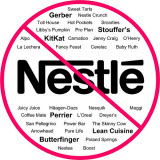
My advice: Buy fresh or at least check labels. And keep boycotting Nestle (Gerber).
Two of Canada’s Networks of Centres of Excellence – the Canadian Stroke Network and the Advanced Foods & Materials Network – today awarded the third annual national “Salt Lick Award” to Gerber Graduates Lil’ Entrées. This choice was made because the “Chicken & Pasta Wheel Pickups” dinner serves up the sodium equivalent to two orders of medium McDonald’s Fries.
The Gerber Graduates meal, which the packaging says is “appropriate for children 1 year or older” and “specially made for toddlers,” contains 550 mg of sodium, or more than half a toddler’s adequate daily intake of 1,000 mg. Meanwhile, according to the McDonald’s Canada website, a medium order of French Fries contains 270 mg of sodium.
Don't let those peas fool you...this isn't a healthy meal.
This doesn't come as a surprise at all, given Nestle's (which owns Gerber and Stouffer's) staunch defense of its sodium-laden Stouffer's meals as appropriate for young children.
What are appropriate sodium levels?
Sodium-levels are an epidemic. According to the Institute of Medicine, which was jointly commissioned by the Canadian and U.S. governments to determine appropriate sodium levels for dietary consumption, recommended sodium intake for each age group is:
- 1000 mg for children aged 1 to 3
- 1200 mg for children aged 4 to 8
- 1500 mg for people aged 9 to 50
- 1300 mg for adults aged 51 to 70
- 1200 mg for seniors aged 70+
According to the USDA Food Guide, toddlers (1 to 3 years old) should be taking in an absolute maximum of 1500mg to avoid adverse effects. So recommended levels are 1000mg and the absolute maximum is 1500mg.
What is wrong with consuming too much sodium?
According to the Globe and Mail, half a teaspoon less of salt per day could save 100,000 lives and US$24 billion each year. Sodium has numerous adverse health effects, which are documented well on the Sodium 101 website, including:
- Sodium and Blood Pressure
- Sodium and Obesity
- Sodium and Cancer
- Sodium and Asthma
- Sodium and Osteoporosis
- Sodium and Heart
- Sodium and Kidneys
- Sodium and Fluid Retention
How can I cut back on the sodium in our diet?
I cannot stress enough that the best thing you can do to decrease the sodium in your family's diet is to rely on fresh food, rather than processed food.
When you do buy processed food, check the labels carefully and compare different brands. I recently realized that the 50% less salt version of one brand's bacon had the same amount of sodium as the regular bacon from another brand. The 50% less salt bacon of that second brand had significantly less sodium. Same thing with frozen lasagnas, pizzas, chicken nuggets, burgers, pasta sauces, etc. Almost all of them have tons of sodium, but some are better than others. Get used to reading the label and remember that what is on the label is the percentage of the absolute maximum allowable sodium for an adult, so you need to adjust down to (a) the normal levels and (b) to a child's level if you are planning to feed the meal to a child.
According to the Canadian Stroke Network, numerous toddler meals had high sodium levels, including:
- Gerber Graduates for Toddlers Lil’ Entrées “Macaroni and Cheese with peas and carrots”: 520 mg of sodium per serving
- Parent’s Choice (Wal-Mart brand) My Little Meals™ “Shells & Cheese with Frankfurters”: 520 mg of sodium per serving
- Gerber Graduates for Toddlers Lil’ Entrées “Cheese Ravioli in Tomato Sauce with carrots, peas and corn”: 480 mg of sodium per serving
- Heinz Toddler “Vegetables, Beef & Pasta Casserole”: 470 mg of sodium per jar
- Heinz Toddler “Beef Stroganoff”: 420 mg of sodium per jar
But there were also other popular brands (which they do not name unfortunately) that have no added sodium. So check those labels...when it comes to convenience food, it is not all made equal.There are tons more tips too at Sodium 101.
My advice: Buy fresh or at least check labels. And keep boycotting Nestle (Gerber).


Reader Comments (43)
This isn't unique to children's foods. Most prepared food in Canada is laden with sodium. Read the label on that can of tomatoes, or that box of ... pretty much anything. Canadian food has up to six times the amount of sodium that American food does. It's really crazy-making when you start paying attention to it.
Crazy making, but once you find good alternatives it is better. When I first started paying attention, I got so angry that even the organic stuff was full of sodium. But after I paid closer attention, I was able to find alternatives for most things that we like to buy that are low in sodium.
As we are starting to think about solids for our first baby I'm really starting to wonder when any if this crap would be better than just feeding her good old fashioned people food. Dishes like spaghetti can be very healthy, yummy, cheap and go a long way. So why would I ever buy processed pastas? Same goes for many other simple dishes. Similar to some of the actions of the pharmaceutical industry, it appears as though the food industry has created a food need that they happily fill.
What's interesting is how people adjust to all that sodium, too. I cook almost everything from scratch, and I find when I do reach for a convenience meal it tastes funny, and almost always far too salty.
A while ago I was rushing through Union Station, and was handed a free sample of Hamburger Helper. It sat in my cupboard for a few months, until the 4 year old spotted it and begged me to make it, and I was in no mood for 'real' cooking and said sure.
It was, in my opinion, completely inedible due to the salt! My kids each ate one bite and no more. We ended up having peanut butter sandwiches for dinner. We're just not used to that kind of salt - but I bet someone who is used to more prepared foods would come to my house to eat and think my food tasted funny and be reaching for the salt shaker!
I was also reading somewhere or other that salt is a super inexpensive way to give some flavour to prepared food. Especially as you cut out fat, you have to do something to keep the taste appealing, and that something is loads of salt and loads of sugar. Easy, cheap 'flavour' that lets you keep the total fat grams low, since so many people look at labels and the first thing they check is the # of fat grams (took me ages to train myself out of that!).
I have a lot advantages when it comes to feeding my family - I work part time, so I can devote lots of time to cooking from scratch. My weekly food budget is relatively generous. And most importantly, I know how to cook, and grew up in a family where pretty much everything was home made. So I'm confident in the kitchen and I have the skills. So it's easy for me to just feed my kids the same thing as my husband and I eat, basically right from the start (kid #2, in fact, has never had any sort of 'baby food' or 'toddler food', other than some of those puffed gerber things I got for free, she's always just been given suitable portions of our food). But so many people don't have those advantages, and there really should be better, healthier convenience food options available that don't cost a small fortune.
OMG! That is just awful! I mean, I'd never give that to my kids, but I'm privileged to stay at home and be able to cook them something I think is healthy. What do most people do!? People don't al have the luck to be able to have the time to research all this, and think about what to put in their children's plate, they trust that the stores don't carry something bad.... It's just sad and infuriating!
UGH!
I've always fed my kids 'people food'. It's really pretty easy because they can usually just have some variation of what I'm having, and it's cheaper and I know what they're actually eating. I agree, 'baby food' is a created need. Incidentally, the creation of the need is related to the widespread use of infant formula, which wasn't nutritionally adequate. It was just prepared using cow's milk and sugar. If you read parenting books from the 1950s they recommend solids and juices and so on as early as 6 weeks, to prevent scurvy. The ever-presence of baby food persists, though, in spite of the resurgence of breastfeeding and improvement in substitutes (which, of course, can never be anything close to as good as breastfeeding all the same).
I agree that it is usually easy to just feed kids "people food". Unfortunately, what passes as "people food" for a lot of people is also full of sodium. Some parents may have mistakenly, yet understandably, thought that giving their child a Gerber Graduates meal might be a healthier alternative than letting Junior share their take-out pizza.
I'm ashamed to admit that I fed those Gerber meals to my oldest child out of convenience. I honestly don't think I ever glanced at the nutrition labels. Isn't that awful? I loved that they were shelf stable and used them when traveling on road trips and in hotels.
Then my 2nd child was diagnosed with severe food allergies, leaving us with a new challenge: finding foods she could actually eat. Because of this, we had to completely change the way we eat and have almost entirely stopped eating processed foods.
Of course we all eat a lot better now and I've since realized how bad all those pre-made foods are for us. But my point is that many moms, especially working moms like me, go for easy and convenient without always doing the research. And frankly, (and stupidly) seeing the "gerber" brand in the "baby aisle" falsely led me to believe it was safe and healthy for my kids. Now I know better.
WOW. I know how much sodium most American food has so if Canadian has more, that's crazy. And why would it have more? Even if it's from the same brand?
Do you know how crazy it makes me when I hear people saying "Oh, but I eat organic so my food is healthy"? ;) Clearly they aren't reading the labels, as organic crap food is still crap food -- it's just made with organic ingredients.
I'm a big label reader and sodium levels in our foods are scary, but there are lower sodium options out there. I tend to eat more salt in my food than the rest of my family due to very low blood pressure (easier on me than medication), but I buy low-sodium foods for my family and add salt to my own dish. ;)
On the topic of sodium in our diet in general ... my friend was recently told by her doctor to cut out sodium. She was having a tough time finding anything to eat! I thought she was being silly until I read the labels more carefully I couldn't believe all the stuff it was added to that I wouldn't have considered as sources of sodium: bread, canned tomatoes, and even fresh chicken breasts (apparently the sodium keeps the water in and makes them weigh more, so they can charge more!). The next generation is going to be saddled with high blood pressure and other medical issues at a much earlier age than past generations if we're not super-careful as parents. (Great, something else to worry about, eh?!)
Thank you for a great post. We need to educate ourselves on label reading...
It's amazing how much people trust Gerber and other brands marketed at babies and children.
Check out this creepy looking report:
Baby Foods and Infant Formula - Global Strategic Business Report http://www.researchandmarkets.com/reportinfo.asp?report_id=338658&t=t&cat_id=.
I wish I had $5,500 to buy it and see more about what really goes on in this industry. It's all very Phillip Morris.
Heather
Last summer my family and I went on a vacation in the mountains. We stayed in these places that were basically a little nicer than a hotel room with a mini kitchen, which was basically a microwave and a sink. My son was about 18 months by then, and while he was eating a good bit of table food I was still worried about how best to prepare meals for him (easy things for us to eat as a quick meal-- sandwiches made with luncheon meat or PB-- were not things, at the time, that I wanted to give him). So I bought a few of those Gerber Graduates meals to try out. I took one look at the nutrition label and reeled at how much sodium they had! But I tried a few anyway, and BLECH. You'd think if something had that much salt it would at least have some taste to it. They were awful. I swore to never feed them to my kid ever again.
Luckily, I married a man who likes to cook and so we often have fresh food to feed our kiddo. I admit I very, very much lucked out on this b/c I'm not sure how much cooking I'd do with real food if it were up to me alone.
Someone once told me that a good way to judge how much is an appropriate amt of sodium in a food is that it should have fewer grams of sodium as the number of calories per serving. I'm not sure where that measure came from, but I try to keep it in mind when I shop. Not that it's easy to find foods that fit that....
I can only imagine how much sodium most people ingest. I didn't think I had too much since I cook a lot and try to eat well. But I wouldn't be surprised if I'm around the maximum recommended. There is more salt than expected in SO many things. I never looked at the sodium content in bread and cereal before now. It's not huge but it adds up. Pickles have a lot. Any canned foods have more than expected. Chicken broth has a lot.
[...] Another reason I’m glad we are feeding Sadie almost no processed foods. [...]
It's funny you posted about this because my husband and I were talking about this just the other day. We breastfeed and are doing Baby-led Weaning (which is basically going straight to "table foods" rather than the rice cereal then baby food route) so it's pretty rare for us to venture down the baby food isle. While in search of organic baby cookies, we decided to check out these "toddler meals" (out of curiosity, not because we were actually considering buying one). In Baby-led Weaning, salt is the biggest thing you have to look out for. We were appalled by how much salt was in one of these things! That is literally more salt than she (as a below 1 year old) should have in a day!
Hi! We loved your post over at KiwiLog and decided to feature it as part of our weekly mom blog round-up. Thanks!
WOW! Thanks for posting this! I knew there was a reason why my family does not eat too many processed foods! Most of our food comes from our farm. Okay, you wouldn't think we were healthy eaters if you read the last few posts I've written on cupcake decorating! LOL!
Thanks for always posting such informative and interesting...and thought provoking posts.
Wow. I inherently trusted Gerber and did not think this was possible. A toddler dinner with so much sodium. I am exasperated with labels and percentages, and have been trying to make more things from scratch but it is difficult. Plus anytime I buy say a Goldfish I feel so guilty!
[...] children are increasingly obese and ingesting dangerous amounts of sodium. The processed foods and fast food industries are largely to blame. The last thing I need, any of [...]
[...] Gerber Graduates: If the staple doesn’t kill your child, the salt just might | PhD in Parentin... [...]
[...] passing as lunch, Kraft Dinner passing as a reasonable donation to food insecure families, toddler meals laden with sodium passing as specially made for toddlers, McDonald’s passing as the food of champions, and more), there has been a lot of talk about [...]
Someone just pointed out this video of a Gerber Graduates advertisement to me:
http://www.youtube.com/watch?v=mRzf_DtNgIM&feature=related
At least most fast food places don't try to advertise their kids meals as healthy. "Healthy meals": I don't think so.
[...] Promoting unhealthy food, especially for young children; [...]
[...] Promoting unhealthy food, especially for young children; [...]
[...] discovered this great video on Ms. Mary Mack (Nicole)’s blog. Whenever I write about the problems with our food system, with advertising to kids, with formula companies, there are always a few [...]
[...] The problem with this scenario is that Nestlé is one of the companies pushing unhealthy food. It is hilarious that Nestlé underscores the problem of french fries, when its Gerber Graduates meals contain more than twice as much sodium as a medium order of French Fries at M.... [...]
[...] isn’t just one company that is marketing unhealthy foods to children, it is the winner of the 2010 Salt Lick Award for having higher levels of sodium in its toddler foods (which it claims are &#... and yet it teams up with the AAP to tell parents that they aren’t feeding their kids a [...]
I don't know that Canadian food necessarily has more sodium than American food. This just happens to be a post about a report on food sold in Canada.
This is inaccurate reporting, unless it is true that canadian versions of these meals contain more sodium because I just looked on the gerber website and they report this meal as having 400mg sodium...still high but not 1/2 of the daily intake. I think every parent should avoid these like the plague anyhow, but just wanted to point out that maybe they are made with more sodium in canada or there is an error in the reporting.
You know, I often find that among folks who DO read labels, they still don't "do the math" and adjust any numbers for their own physiological requirements. Simply taking the information for a 2,000 calorie diet and assuming that it's a-okay across the board is, in my opinion, just as dangerous as not reading the labels at all.
Thanks for posing the sodium requirements by age!
[...] Promoting unhealthy food, especially for young children; [...]
[...] is basically a breakdown from this site, which includes not just Gerber baby food, but other products as well: According to the Canadian [...]
i found a plastic thing in my sons jar of gerber 2nd foods sweet patatos and they only sent me a few cpns
It's not just baby food either. While shopping with my children one day, ds pointed to some Lunchables and asked if we could get some for them to take to school. When I said no, he replied by saying "But mom it says it has calcium and vitamin D in it!". I stopped and asked him to go get one so we could look at it. I showed them the nutrition label and we looked at the amount of sodium in it (an outrageous amount). We also looked at the ingredients and my kids quickly decided that they didn't want them after all. It was a good teaching moment and I was able to show ds that just because they are a source of calcium and vitamin D, that doesn't mean they are a good source of it!
Oh, I am always forgetting why I stopped buying this stuff. And what did I do today? Yep, bought one of those out of desperation. My 3 year old son won't eat anything that isn't chips or chocolate and I figured, hey, if he eats *this* it'd be better... #fail
I did get him to eat some sweet peppers the other day, though, so I'm super thrilled with that! And he just asked for carrots. :)
The link for the article/video about the staple in the little boys meal didn't work for me.
This one ought to: http://www.kirotv.com/videos/news/watch-it-staple-found-in-gerber-graduates-mother/vCjyq/
Thanks for all the great information
I had to totally give up on prepackaged baby foods, even the "healthy" ones. They are far too carb-based, far too high in sodium, and far too lacking in fat and protein.
I mean even if I were going to try to feed my toddler the "healthy" baby foods, he would basically just be eating fruit, wheat, and yogurt all day long. WTF.
There's no such thing as an essential carb, people. Babies need fats to build their brains. Low fat is BAD FOR BABIES. (It's also bad for humans in general, but that's an argument for another blog.)
Wow, *high five* mama!
Thanks! The post was written a while ago and the link was good then. I'll update with the new link.
Making your own baby food is sooo easy. Directions are simple: boil the stink out of a vegetable and then puree. Freeze them in ice cube trays and pack them in small tupperware for easy transport.
It takes less time to do this than to make your own dinner. Why are you still buying baby food?
http://www.dad-camp.com/2009/09/its-easy-to-cook-your-own-babyfood/
[...] eat or ingest… To the packaged and processed food that are marketed as “healthy” but one serving contains TWICE the amount of sodium as McDonald’s french fries (yes, you read that right)… To the chemicals in the formula [...]