










The Scientific Benefits of Breastfeeding
 Thursday, May 14, 2009
 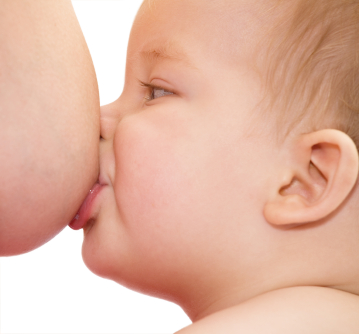 There are a great many Web sites and studies out there that talk about the benefits of breastfeeding. Like much of the stuff on the Web, they have been written at different stages in time, may or may not have been updated, may be based on science or may be based on what someone heard from their neighbour. In short, you can't believe everything you read online.
Breast is best.
Or is it?
All of the major health authorities in the world say that it is. The American Academy of Pediatrics, Health Canada, the World Health Organization, and others are all on the bandwagon. But it has become fashionable of late to claim that breastfeeding isn't really all that beneficial. That the benefits are all overblown.
When I set out to sort through the mess, to find the truth, I started initially collecting bibliographies and lists of studies that I was going to try to scour through at some point if I had time. Not for myself. But to provide a voice of reason in the face of the naysayers.
Fortunately, a number of people that I know and a number of authorities on the topic pointed me to one wonderful study. The über-study of all über-studies. It is called Breastfeeding and Maternal and Infant Health Outcomes in Developed Countries (April 2007) and it was prepared by a team of investigators at the Tufts-New England Medical Center Evidence-Based Practice Center in Boston. This is what was included:
We screened over 9,000 abstracts. Forty-three primary studies on infant health outcomes, 43 primary studies on maternal health outcomes, and 29 systematic reviews or metaanalyses that covered approximately 400 individual studies were included in this review.
Not only is the methodology sound and the research extensive, but as the title indicates, this study is about health outcomes in developed countries. That means that we can put to rest the claims that breast is only best if you don't have access to clean water or enough money to buy formula.
So what are the real scientific benefits of breastfeeding?
I have summarized them below. If you want to see the full details on the number of studies that contributed to each finding, the degree of accuracy, and the quality of the studies, then read the full paper. This is intended only as a summary of the major conclusions.
The benefits to the child
There are a number of health benefits to the breastfed child, some of them are significant and others are less significant.For full term infants the benefits include:
- Acute otitis media (middle ear infections): Babies that were ever breastfed had a 23 percent lower incidence of acute otitis media than exclusively formula fed babies.
- Atopic dermatitis (type of eczema): In families with a history of atopy, exclusive breastfeeding for at least 3 months was found to have a 42 percent reduction in atopic dermatitis compared with breastfeeding for less than 3 months.
- Gastrointestinal infections: Infants who were breastfeeding had a 64 percent reduction in the risk of non-specific gastroenteritis compared with infants who were not breastfeeding.
- Lower respiratory tract diseases: There is a 72 percent reduction in the risk of hospitalization due to lower respiratory tract diseases in infants less than 1 year of age who were exclusively breastfed for 4 months or more.
- Asthma: Breastfeeding for at least 3 months was associated with a 27 percent reduction in the risk of asthma for those without a family history of asthma and a 40 percent reduction for those with a family history of asthma.
- Type 1 Diabetes: Breastfeeding for at least 3 months results in between a 19 and 27 percent reduction in incidence of childhood Type 1 Diabetes compared with breastfeeding for less than 3 months (findings confirmed through multiple studies, but some cause for caution in interpreting results).
- Type 2 Diabetes: Found a 39 percent reduction in risk of Type 2 diabetes later in life for people that were breastfed as infants (some cause for caution in interpreting results).
- Childhood Leukemia: Breastfeeding for at least 6 months associated with 19 percent decrease in risk of childhood acute lymphocytic leukemia and a 15 percent decrease in the risk of acute myelogenous leukemia.
- Sudden Infant Death Syndrome (SIDS): The meta-analysis found that breastfeeding was associated with a 36 percent reduction in the risk of SIDS compared to not breastfeeding. Another study completed since the meta-anlaysis was done found a 50 percent reduction in the risk of SIDS as a result of breastfeeding.
In the past, other claims have been made about the benefits of breastfeeding. However this study determined that some of those benefits were based on other factors that may be associated with a greater incidence of breastfeeding. This includes cognitive development (IQ), which is more likely to be tied to maternal intelligence, socioeconomic status and home environment. It also includes the obesity issue. People who were breastfed are less likely to be obese as adults, but it is not clear whether this is due to breastfeeding or other factors (e.g. being part of a series of healthy choices that a family makes). The risk of cardiovascular disease also does not appear to be lower in breastfed infants than in formula fed infants.
The benefits to the mother
Often people only talk about the benefits to the baby, but forget to talk about the benefits to the mother. Women that are having trouble breastfeeding and considering giving up should think about not only their child's health, but also their own health and weigh the short-term issues they are having with breastfeeding against the longer term potential health benefits. Those benefits include:
- Maternal type 2 diabetes: In women with no history of gestational diabetes, each additional year of breastfeeding resulted in a 4 to 12 percent reduction in the risk of maternal type 2 diabetes (only nurses included in these studies though, so interpreting results for general population must be done with care).
- Breast cancer: A reduction of risk of contracting breast cancer of 4.3 percent for each year of breastfeeding (one study) or 28 percent for 12 or more months of breastfeeding (another study). Another study that I reported on in Save Yourself, Save Our Health Care System, found that if women in Canada breastfed for at least 16 months over their lifetime, we could cut the breast cancer rate from 6 percent of women to 3 percent of women.
- Ovarian cancer: Breastfeeding results in a 21 percent decrease in the risk of ovarian cancer.
Like with the benefits to the infant, there were some frequently reported benefits to the mother that cannot be scientifically proven. One example is weight loss, where there is no clear evidence that breastfeeding mothers shed the weight more easily than formula feeding moms (but we can eat more chocolate bars!). Another example is osteoporosis, where there is no clear benefit from breastfeeding. Postpartum depression is a tricky area, since it is hard to determine cause-effect i.e. did women stop breastfeeding because they had PPD or did they have PPD because they stopped breastfeeding?
The naysayers
When she wrote The Case Against Breastfeeding, Hanna Rosin claimed to have plowed through the studies on breastfeeding and found that the benefits were scant at best. Unfortunately, a lot of people read her article and I have seen her claim now stated over and over again as a fact. The truth is that Hanna Rosin only read a select few studies on breastfeeding, in particular those that would support her claim that perhaps the benefits were scant. She did not do a comprehensive review of the literature on breastfeeding like the one that I cited above.
In my post on the Economics of Breastfeeding: A Cost-Benefit Analysis and the follow-up to that post, I mentioned a study called Maternal Employment, Breastfeeding, and Health: Evidence from Maternity Leave Mandates that claimed that "increased breastfeeding duration has had no effect on overall physical or psychological health outcomes of either children or mothers". That seemed like a very loaded statement that contradicted much of what I had read elsewhere, so I dug into it. A better way to phrase their result would have been this:
- Extending maternity leave rights in Canada led to women taking 3 to 3.5 months longer off of work on average.
- Most women in Canada breastfed both before and after the change in maternity leave policies.
- Despite most women initiating breastfeeding, both before and after the change in maternity leave policies few women in Canada met the recommended duration of breastfeeding.
- The change in maternity leave policies resulted in women breastfeeding for, on average, 1 month longer than they did before the leave policy was changed.
- It also resulted in an average increase of 1.5 months in the length of exclusive breastfeeding.
- This increase in the length of breastfeeding did not show improvements to the physical or psychological health of either children or mothers using data collected about mother/baby pairs for which the children were aged 7 to 12 months old and 13 to 24 months old at the time
Basically, this doesn't look at the difference between formula feeding versus breastfeeding. It doesn't look at significant increases in the length of breastfeeding. It doesn't look at long-term results of breastfeeding on the child or the mother's health.
While I support continued research on this topic, we need to be careful how the results are thrown around and be more specific about what was actually found.
Does this mean that breast is only?
Breast is not just best. In fact, breastfeeding should be the standard, the default. However, that doesn't mean it is right or even possible for everyone all of the time. So breast is not only. Stay tuned for my next post on the issue of choice and options in infant feeding.


Reader Comments (95)
I am due with baby #2 in June and plan on breastfeeding. I tried it with my daughter and she just wouldn't take to it so I pumped for 6 months. Working and pumping is quite difficult - I wish I could have given her more breastmilk but we both gave it our best shot. Hopefully this next baby will be a bit easier and if not I will do my same routine with pumping for the first 6 months.
Wow. Thorough. This is one to bookmark and keep handy.
Thank you so much for this info! Every woman who gets asked why she is (still) breastfeeding should point to this article. It's a no-brainer!
I wish I could have been this eloquent and well-informed when one of my coworkers praised Hanna Rosin's article! Thanks for an excellent post. I will be sharing it.
Great post! I will be bookmarking this.
[...] This post was Twitted by jeneerichard - Real-url.org [...]
Great post, I love how detailed it is and points out some important facts that simply can't be disputed.
I do want to mention that Canada has our own Paediatric group - the Canadian Paediatric Society - that also states that breast is the best start. http://www.caringforkids.cps.ca/pregnancy&babies/breastfeeding.htm
Thanks!
Your blog entries inspire me to learn more about the benefits of bf and how to talk about it to others. Thank you for another very informative post.
EXCELLENT summary!! I too, like you, was planning to combining through all of the studies that I could find - thank you for saving me the time!! This is awesome!!
Those benefits seem pretty compelling to me. Although I suppose in my case you'd be preaching to the choir anyway. Honestly, though, it's beyond alarming to me that people would take the word of one 'journalist' and discount the recommendations of virtually every health care body in the world.
[...] This post was Twitted by phdinparenting - Real-url.org [...]
Definitely a stumbler. Thanks as always for an excellent post. Now I will stumble off to Stumble upon....
Here is the follow-up post promised on infant feeding choices: http://www.phdinparenting.com/2009/05/14/when-it-is-not-breast/
Wonderful! I agree with all these comments..thorough, well-written, well summarized, great resource to be Stumbled and bookmarked. I have seen alot of the studies and much of this isn't surprising or new to me.
What I hope your readers will take with them is your last part about how you had to dig deeper into the summarizing statement of the article "Maternal Employment, Breastfeeding, and Health: Evidence from Maternity Leave Mandates ". I am not familar with this study but the sheer way the statement was written or worded is... in itself sounding so very negative to me.. You have made it much clearer to an average or (professional for that matter) peruser of data. The authors could say something slightly more positive in their conclusionary (is that a word?) summary statement like "remained the same" instead of "had no effect on" etc.. So many researchers do that! The abstract isn't always the whole ball game! So your next to last statement "...we need to be careful how the results are thrown around and be more specific about what was actually found.".... is most the important lesson to me. Thanks!
wow!! very comprehensive. something I will definitely be bookmarking and referring to. thank you!
I'm not a scientist, I am a mother and I like that this study appears to be an impartial and factual representation of the current science of infant feeding.
What I like less is that all of the quoted statistics speak of a reduced risk if breastfeeding is selected. In my humble and non-medical opinion, this kind of implies that the norm is formula feeding. While I appreciate that this is the case in most western coutries, the biological norm is to breastfeed. I think studies would make more sense and have a greater impact if they assume the biological norm and highlight how much MORE at risk formula fed infants are of developing x,y,z conditions.
I think the term 'Breast is Best' kind of does the same thing. It assumes formula is normal but breastmilk is better. While it gets the message to those 'best' parents it still assumes that formula is normal. Perhaps in the future, thanks to people such as phdinparenting, far more wordy and knowledgeable than me, parents of the future will be hearing 'Lactation and Breastfeeding is natural and healthy; Formula milk is a poor imitation which increases the risk of....' Just not quite as catchy though is it?
I wasn't able to breastfeed my 1st for longer than a month and even then I needed to supplement her diet with formula because I ended up having a severe UTI. I hope with my 2nd baby (due in about 4 days) I will be able to breastfeed for longer.
@(Mel) PrettySprinkles
I agree that breastfeeding is natural and healthy. I agree it should be the standard and the norm. However, I still do use the phrase "breast is best".
The reason I do that is that there are many things that our health authorities decide are safe enough for human consumption. That means that they won't kill most people most of the time. However, there can be a significant difference between something that is extremely safe and something that is just barely safe enough to be allowed and should only be used in very specific circumstances. I wrote more about this here:
http://www.phdinparenting.com/2008/11/29/safe-or-unsafe/
So within the range of different things that we can feed our babies, breast is best.
[...] Blatantly stolen from PhD in Parenting, much more info here. [...]
As the other commenters have said, this is a fantastic summary of the benefits of breastfeeding (or should I say the shortcomings of formula feeding). I too have struggled to filter out old/outdated/unproven claims about breastfeeding from the genuine facts. Great work. I will refer my LLL peer supporter colleagues to this!
Great summary. A definite stumble. I'm thankful my formula baby is not only healthy and intelligent, but healthier than even some breast-fed babies we know. I think I would have sent myself crazy with worry reading this stuff back when we had to give up, lol.
I haven't looked at the study - were other environmental factors considered?
@Mon: What do you mean by environmental factors?
[...] Annie, like many attachment parenting advocates I'd imagine, is a big supporter of breast-feeding. Indeed, just last week I linked to her excellent summary on some of the health benefits of breastfeeding over formula feeding. [...]
[...] Annie, like many attachment parenting advocates I'd imagine, is a big supporter of breast-feeding. Indeed, just last week I linked to her excellent summary on some of the health benefits of breastfeeding over formula feeding. [...]
I think everyone missed the point of Hanna Rosin's article. Clearly, there are benefits to breast feeding,but they are overstated. Data can be deceiving when looked at with a non-scientific eye. Breast feeding moms frequently look at non-breast feeders with dismay, and other moms have anxiety attacks or sink into depression when they can't breast feed successfully. It need not be so.
There are clear benefits to bf, but they are MINIMAL at best. For instance, the respiratory infections, ear infections, and gastrointestinal bugs do not translate into poor health later in life. A non-breast-fed child may visit the doctor one extra time in the first year of life based on the data (big whoop). One can really throw out most of the diabetic data due to confounding factors, but even if you believe it, the absolute risk of diabetes only changes by about 5 percent. The risk of childhood leukemia is about 3 per 100,000. So breast feeding may save one child in about 200,000.
Bottom line, other habits like not having a pool in your backyard, avoiding McDonalds, or keeping your kid out of high impact sports is probably more beneficial than any breast milk.
@Doc:
That might be what you would believe if you only read Hanna Rosin's article. But if you read the http://www.ahrq.gov/Clinic/tp/brfouttp.htm" rel="nofollow">Breastfeeding and Maternal and Infant Health Outcomes in Developed Countries that I linked to in this post, you would see that there substantial benefits. Unlike Rosin's article that picked and chose a few sources that helped make her case, the paper I linked to is a systematic review of the body of existing research.
Obviously the absolute risk of these various ailments will depend on their frequency of occurrence in general, but if the concern about ear infections (for example) is great enough that a vaccine is being developed, then I think being able to decrease the occurrence of ear infections by almost 1/4 by breastfeeding is pretty significant.
Of course, breastfeeding your child doesn't mean that you don't need to make any other healthy choices ever. But generally, choosing to breastfeed is one of a series of healthy choices that a family makes.
I've read all the data (not just an article or a systematic review). I am a physician and its what I'm paid to do. I'm not arguing the data, but you have to keep it in perspective. 99% of the data regarding breast feeding are based on case control studies, which are really made to generate hypotheses and find correlations. To prove these correlations you really need a double-blinded case control study which will never happen and is quite impractical.
I advise my patients to breast feed, I believe it is better, but Rosin does not argue this in her article. The point of her article is that breast feeding is probably better from a global perspective. If breast feeding doesn't work for a particular mother, don't sweat it, your child will be just FINE. The condemnation and guilt that is rampant in the parenting world about not breast feeding is a huge overreaction to the data we currently have.
@Doc: If that was her point, I would have let her make it and kept my mouth shut. However, beyond claiming that the scientific benefits are scant (based on a few findings that she picked and chose), she also claimed that it was http://www.phdinparenting.com/2009/03/17/the-case-against-breastfeeding-is-it-anti-feminist/" rel="nofollow">anti-feminist and http://www.phdinparenting.com/2009/04/24/the-economics-of-breastfeeding-a-cost-benefit-analysis/" rel="nofollow">limited women's earning potential. I think she is taking the easy route out. Rather than raging against the cultural and societal barriers to successful breastfeeding, she makes a "case against breastfeeding". I could make a similar "case against healthy eating", but that would just be silly.
Certainly the pendulum has swung on the issue of breast feeding. I appreciate the enthusiasm regarding breast feeding that has surged over the last two decades. However, I respectfully disagree with your take on Rosin's article. The article (especially the title) was written to evoke a response and provide the counter to the guilt and shame that many mothers face when they choose to not breast feed or are not able to. Her "case against breast feeding" was (IMO) supposed to be a little tongue-in-cheek. Basically saying, "its not as big of a deal as they say." I tend to agree with this.
The pendulum has swung in such a direction that another article on the internet about the benefits of breast feeding is not needed. For those who choose to breast feed this information only serves to look down on bottle feeders and makes those who bottle feed feel that they are not good mothers. The scientific data is soft IMO, but not to be disregarded. Bottom line, enjoy your newborn...love him/her in your way...nurture your child. Don't fret over their source of nutrition, there are more important things to fret over. Enjoy motherhood. If you breast feed, Great! If you bottle feed, don't feel that you are less of a mother...its ok...seriously.
I can't truthfully say that I disagree with the Breast is Best statement, but I am appalled at some of the comments in response to this post that would rather point out how much worse it is to formula feed your baby. I had a terrible time breastfeeding, and pumped for many months simply because of guilt with respect to feeding my baby formula. I did not bond with my baby for some time because of the toll this took on me, physically and mentally. Is this what we wish to promote? Guilt to women and misery in the precious first stages of life? I think not. I will never get those days back with my son, and think that if I have the same trouble with future babies, I would go straight to formula. Quite frankly, unless you've exclusively breastfed for the first years of life, I don't think you have any business judging women for using formula, and even then, you should commend any mother for doing what is best for their own baby. Having a mother who is stressed physically and mentally is of no benefit to any newborn.
@Sad Mom: I think even moms that have exclusively breastfed for the first years of life do not have any business judging women for using formula. Providing information about the ideal choice and judging a mom for making a different choice are two very different things. I as I explained in my other post http://www.phdinparenting.com/2009/05/14/when-it-is-not-breast/" rel="nofollow">When it is not Breast, there are many things that prevent moms from breastfeeding. I think we need to fight to change those circumstances where we can rather than judging moms that choose formula.
[...] believe strongly in the science of parenting. Science tells me that “breast is best” , so of course I chose to breastfeed my children. We know that it is safest for infants to [...]
[...] The researchers did a really good job of citing references in almost all parts of the paper. And then this. They come out with a whammy of a sentence, with no reference, no footnote. This unsubstantiated finding is that “increased breastfeeding duration has had no effect on overall physical or pscychological health outcomes of either children or mothers.” Says who? (Note: The researchers have since provided me with the missing reference : Maternal Employment, Breastfeeding, and Health: Evidence from Maternity Leave Mandates. I read it and commented on it in my post on the Scientific Benefits of Breastfeeding) [...]
[...] we need to break down these barriers so that all families and all babies can benefit from the health benefits of breastfeeding and the economic benefits of [...]
[...] breastfeeding . In the developed world, formula feeding isn’t as likely to kill a child, but not breastfeeding does come with a whole host of health risks for both the baby and the mother. It can lead to deaths as well as increased health problems and health costs (whether you have a [...]
[...] Benefits of Breast Feeding [...]
[...] it comes to something like infant feeding (breast or formula), discipline (spanking or punishment versus gentle discipline), sleep (cry it out versus parent to [...]
[...] Breastfeed: Breastfeeding is not just best for your baby and best for you, it is breastfeeding is also best for the environment. The manufacturing of infant formula is an [...]
[...] my post on the scientific benefits of breastfeeding, I outline where breastfeeding provides a statistically significant benefit over formula feeding in [...]
i like your opinion on exclusive breastfeeding pls i would like to know what u think is mother's perception on the effect of exclusive breastfeeding on their infants as you deal with their opinion most of d time.
@kelechi: I think most people are fairly well educated about the benefits. Not sure what you are looking for specifically.
Where do you get your information from?
Geri: I explain in the article where the information came from. Most of it is from http://www.ahrq.gov/Clinic/tp/brfouttp.htm" rel="nofollow">Breastfeeding and Maternal and Infant Health Outcomes in Developed Countries.
[...] The Scientific Benefits of Breastfeeding [...]
[...] else has been introduced (on purpose or by mistake) in the manufacturing process. In addition, breastfeeding has many benefits that infant formula cannot replicate and infant formula has risks to the child and negative environmental consequences that breast milk [...]
While I was pregnant, a friend of mine told me that the thought of breastfeeding made her feel like a cow??? And so she didn't. I think its child abuse to deny a baby their natural food just because its inconvinient or strange in the beginning. As a mom who breastfeeds, I cannot imagine denying my baby this right. If there are proper medical reasons for not breastfeeding its a different story.
[...] but the scientific one will take more research and I may only get to it next month (Here it is: The Scientific Benefits of Breastfeeding). However, the feminist one is much easier to address. In summary, Rosin questions whether [...]
Fantastic article!! Thank you.
[...] hearing the same old thing over and over again. Every time a study comes out that talks about the benefits of breastfeeding, whether it is the benefits to the child, the benefits to the mom, or the benefits to society in [...]
[...] are other reasons that I breastfed. I did it for their health and my health, carefully considering the health benefits of breastfeeding as well as the many cost savings to our health care system. I did it for the bonding, the [...]